Showing posts with label freeforms. Show all posts

Friday, 1 May 2026

Peaky 2026

I played two great games at Peaky 2026: Triremes in Space and Grease Point Blank. (These are working titles and may change.)

Triremes in Space

Triremes in Space is a 12-player game of Ancient Greeks in space, written by Helen Jones, Megan Jones, Michael Jones, and Ewan Munro. 

Hang on, Ancient Greeks in space? Yes - and this isn't even an original idea! As Megan explained to me afterwards, she was inspired by the second-century travelogue/novella A True Story by Lucian of Samosata, in which Lucian and his crew are blown into space and have a series of adventures. I've never heard of it before, and it's arguably the first ever SF story. 

Spider battle from A True History by William Strang, Public domain, via Wikimedia Commons

Anyway, I was playing Selene of Luna, leader of the Moon people. And I was meeting humans from Terrus for the first time - Spartans, Corinthians and Athenians. All hated each other, and yet I somehow needed to get them to help me with my problem with the sacred cows on the Morning Star...

Structurally, Triremes in Space starts with four factions, with three characters (broadly a leader, a ship's pilot and a warrior - although some factions may have had a different mix). The factions may be enemies or allies – or in the case of the Moon people, unknown.

The Moon people were delightfully alien, and as I was meeting humans for the first time, I enjoyed misunderstanding them and (hopefully) being unclear.

Amazingly, I achieved all my important goals - although it turned out that one of my advisors was deeply dodgy, and I had no idea!

It was also helpful having one of the authors (Ewan) as my other advisor. Inevitably, we hit bits of lore that hadn't been fully explored, and he provided the explanation while also filing the question and answer away for later.

Grease Point Blank

Grease Point Blank is a 12-player 1969 high-school reunion game inspired partly by the movies Grease and Grosse Point Blank. It was written by Nickey Barnard, Philippa Dall, Heidi Kaye, Tony Mitton and Christi S.

I couldn't believe my luck when I opened my character sheet: I was playing the John Cusack character! Okay, I'm trying not to spoil this, so I'm not going to say who I was playing or what happened. But it was so much fun, there was angst, drama, unexpected attention and maybe even murder.

I think my favourite moment was a completely unexpected conversation with Graham, but the game was filled with lovely moments.

Other games

Two other games were also written at Peaky 2026. I didn’t play them, but it sounded like they went well.

For The Greater Good by Adam Hayes, Kirstine Heald, Kevin Jacklin, Peter Jones, and Julie Winnard. Strange goings on in an English village for 8 players.

Lord Gount's Expedition by Clare Gardner, Martin Jones, Alli Mawhinney and Rich Perry. Sailpunk, for 8 doomed players. (I may have got the title for this one wrong.)

And you'll notice I didn't write a game this time. That's because I started, but it didn't work out. That happens sometimes. I ended up talking about Cafe Casablanca and helped proofread For the Greater Good.

Sunday game scheduling

And I have to say, Sunday was lovely. Only four games were running, and that meant that instead of trying to cram three sessions and lunch into about seven hours, everything was much more leisurely. 

So our schedule was:

  • 8:30-9:30 Breakfast
  • 9:30-12:30 First game slot (Triremes in Space and For the Greater Good)
  • 12:30-13:30 Lunch
  • 13:30-16:30 Second game slot (Grease Point Blank and Lord Gount's Expedition)

So that was a very leisurely three hours for each game. Nothing felt rushed, and we had loads of time for feedback and relaxing between games. 

(Sometimes we have six games running at Peaky. So that means an additional slot, and all the slots are only two hours long with very little space in between. And lunch is either very early or very late. And no, we can't push into the evening because some people have to leave, and others want to just chill after a busy weekend.)

I'd like to suggest we do that every Peaky, but that means having more games that aren't ready to be run. Is that a bad thing? Maybe not.

Click here to learn more about Peaky.

Monday, 23 March 2026

My larp origin story

Prompted by Mo Holkar’s thoughtful reflections on how he started larping, I thought I’d do the same. My memory is hazy over a lot of this, as it was a long time ago.

1981: Traveller

Traveller was my first ttrpg. I was a science fiction fan before I was a roleplayer, so it was only natural that I was drawn to Traveller. (I’ve written before about how I stumbled across Traveller.) 

At the same time, White Dwarf began being distributed in newsagents. I bought every copy, and I remember reading about Treasure Trap (probably the UK’s first larp) in issue 31 (June/July 1982).

I was intrigued by Treasure Trap, but larp/lrp didn’t appeal as I wasn’t interested in fantasy. I was an SF fan.

Why didn’t I like fantasy?

Back in the late 70s and early 80s, when my tastes were forming, SF was much easier to get hold of than fantasy. Yes, there was some (Tolkien, Moorcock, Eddings, Donaldson, Le Guin), but I found none of it as interesting as the worlds of Heinlein, Niven, Pournelle, Drake, Zahn, Clarke, Haldeman, Shaw, Foster and more.

Plus, there was Star Wars and 2000AD. Fantasy had nothing like that.

And even if fantasy had been easier to get hold of, I found them ponderous multi-part epics anchored in the past. I much preferred to explore bright futures full of spaceships, aliens and distant planets. I always have.

1987: Larping friends

In 1987, I became friends with some larpers in Brighton. I didn’t actually do any larping, but I knew about it and saw their costumes and elf ears. I wasn’t very athletic, and running around the woods trying to hit things with rubber swords really didn’t appeal.

Neither did the costuming. I guess my longstanding disinterest in costuming set in then. I remember visiting the Loughborough University larp stall (I’m guessing this was fresher’s week in my final year) and noting that they expected you to have your full costume by the third week. That put me off, and I never signed up.

I attended a games convention in London (Games Day 87?) where a few rooms were set aside for a short dungeon-style larp. The only thing I can remember about it was a room where the PCs had to defeat an NPC champion (named Achilles) by hitting his foot.

Late 80s/Early 90s: Aslan and The Freeform Book

The 1980s were a great time for fanzines, amateur magazines about roleplaying games published for love. I subscribed (and contributed) to a few, including Andrew Rilstone’s Aslan. In Aslan, Andrew described something called a “fantasy party,” which is what I would now call a freeform/chamber/parlour/interactive larp. It sounded fantastic – thirty or so people all playing the same political game. I wanted to play!

Brian Williams writes about Andrew’s fantasy parties in more detail here (he attended them).

Somewhere around this time, they started being called “freeforms” (to make them distinct from regular larps). The name was probably inspired by Morgana Cowling’s The Freeform Book, published in 1989. (I now call them “freeform larps” or “parlour larps” or “chamber larps” depending on who I’m talking to.)

1992: Home of the Bold

In 1992, I finally got to play in a freeform.

Home of the Bold was held at Convulsion, a Chaosium-themed convention run by David Hall (of the Tales of the Reaching Moon Gloranthan fanzine). Written by Kevin Jacklin and David Hall, Home of the Bold was amazing – and changed my life. I had a wonderful time, made lifelong friends and decided I wanted to do more of these crazy games. 

In costume at Count Stolwitz in Home of the Bold
Me as Count Stolwitz in 1996 playing Home of the Bold.
Possibly the earliest photo of me larping...

(I’ve now played Home of the Bold three times – the last time at Continuum in 2024.)

Home of the Bold was exactly what I was looking for – a game that was like a city filled with interesting people all pursuing their own agenda. While regular larping seemed to me to be little more than tabletop roleplaying done standing up (players went on adventures and there were monsters to battle), this was something very different.

I also realised that if you removed the SF/fantasy nerd elements, freeforms might be a great way to introduce people to roleplaying.

1992 to 1995: Eleventh Hour and more early freeforms

In this period, I played in a couple more freeforms and a “proper” larp, Eleventh Hour.

Freeform larps

In 1994 I played Life of Moonson, again at Convulsion. It was a more heavily Gloranthan freeform, and I can remember very little about it other than I had a ridiculous costume. I think I also played Last Voyage of the Marie Celeste then, playing a vampire. One of the characters in the game was the ship’s cat, which might be fine for some players, but I’m glad that wasn’t me!

Eleventh Hour

Eleventh Hour was a series of weekend fantasy larps that Lynne Hardy (whom I first met in Home of the Bold) invited me to. I played in two events, both held in youth hostels on the Welsh border. I played the same character, a devious scribe, and they were fine. I wasn’t bowled over by them, and much of the time it felt like we were making our own entertainment.

One thing I remember about the second larp is the big set-piece battle, which, as a non-combatant, I sat out of. I remember watching the magic users drawing chalk circles and chanting and thinking, “That looks so dull. I’d much rather roll some dice. I want to pretend I’m casting spells, I don’t want to actually do it.”

(So, as well as a disinterest in costuming, I’m not that interested in the reenactment-y elements of larp.)

1995: Café Casablanca

In 1995, Kevin Jacklin and David Hall (and their friends) brought Café Casablanca to the UK, held in a hotel in Nottingham. I had heard about Café Casablanca because at Continuum, Sandy Petersen would talk about it – I think he was one of the authors, although the game is credited to Cruel Hoax Productions.

Café Casablanca was incredible. I ended up falling in with the Resistance, and we were hopeless because we were infiltrated by a German spy. So they knew everything! 

Café Casablanca was followed in 1997 by The King’s Musketeers and in 1997 by 1897: Queen Victoria’s Diamond Jubilee, all written by Cruel Hoax Productions. And pretty much since then, a weekend freeform has been held at the Retford Best Western Hotel. This year it was Gateways, and next year it will be Café Casablanca’s fourth outing. (More details here.)

Mid to late 90s: A variety of freeforms

So, in the mid-to-late 90s, things freeform are picking up. The weekend games became a fixture on the calendar, and freeforms were a regular part of Continuum (Convulsion’s successor), and I was playing similar games at other conventions (such as UK Gencon).

Playing An Incident at Two Bridge Junction
An Incident at Two Bridge Junction

Some other notable events of that time – I don’t have exact dates for these.

  • I set up the UKFreeforms mailing list so that UK writers and players could stay in touch and discuss freeforms. It has changed providers a couple of times, but it still exists, and you can join it here
  • I joined the Continuum committee for two conventions as the freeform wrangler.
  • I wrote An Incident at Two Bridge Junction, a six-player wild west vampire freeform. I played it with friends a couple of times.
  • I wrote Death on the Gambia, but more on that shortly.
  • I co-wrote Midsummer Mischief, a 25-player PG Wodehouse freeform. My first “big” freeform, I learned a lot about collaborating on a game. Midsummer Mischief was first run in 1998, and the files can be downloaded from this page.

1999: The Bradford vampire larps

Inspired by White Wolf’s The Masquerade (the larp rules for their Vampire: the Masquerade ttrpg published in 1993), a group of larpers decided to hold a vampire larp in the 1 in 12, an anarchist nightclub/social centre in Bradford. I can’t remember how I found out about this, but I remember heading off in a friend’s VW van and playing at being vampires overnight. While I have vague memories of hanging out in the club (I have no idea if there were any regular patrons in the club that night – it was hard to tell), I remember a few things:

  • I have no idea if there was a plot. I suspect there was, but I suspected it involved the GM’s friends. (That was my experience of several larp events – including a couple of big ones at UK Gencon. If you weren’t part of the clique, you had to make your own fun.)
  • Characters were based on a point-buy system (based on The Masquerade, I think). However, we were playing in a nightclub, and if you wanted to eat or drink, you needed a particular ability. So, of course, we all needed that ability because we were playing in a nightclub! (But I think most players just ignored it.)
  • The GMs had an insanely unsafe rule about firearms. Basically, if you wanted your character to have a gun, it needed to fire blanks! A toy gun firing caps was no good. (They clearly hadn’t done a risk assessment.) Luckily, nobody was hurt – although the armed response squad was called out one night because there had been five reported shootings in Bradford that night!

Thankfully, the larp only lasted for two or three sessions. (Or perhaps I just drifted away.)

Late 90s: Murder mystery larps

One of the friends I made in Home of the Bold was Dixon Jones, who ran Initiative Unlimited and ran larps as team-building exercises for businesses with Adam Hayes and David France. They also hosted occasional murder mystery evenings, and I attended one in London with my brother.

They also sold murder mystery party games as pdf downloads, and I became an affiliate, creating a now-defunct website, Run Your Own Murder Mystery Games and earning a commission every time I sold a game.

Their games were fine, but I wanted to write and sell games with a little more depth and complexity. Such as Death on the Gambia, an introductory larp that anyone could play. It didn’t have a murder in it, and after failing to sell it to anyone, I realised I would have to create my own company. But I wasn’t sure how to do that.

As I entered the new millennium, I was playing more and more freeform-ish larps. I had found what I was interested in. Importantly, I played some of Epic Experience’s games at Gencon UK and other conventions. And through Epic Experience, I met Mo Holkar.

2001: Freeform Games and Peaky

In 2001, two key events occurred: Freeform Games and the first Peaky writing weekend.

Freeform Games

In the summer of 2001, I called Mo and suggested we form a company that would sell freeform larps as murder-mystery games. I suggested we call it Freeform Games (perhaps not my wisest choice of name). Fortunately, Mo agreed. Even better, he had set up businesses before, and as a result, on 9 October 2001, Freeform Games was born. 

Shortly after that, we released our first game, Death on the Gambia. We now have more than forty… 

Peaky

In November 2001, 20-ish enthusiastic members of the uk-freeforms mailing list met in a converted farmhouse in Edale in the Peak District (hence, Peaky) over a weekend (Friday to Sunday) to write a freeform. Or more accurately, three freeforms.

The first time we met, it was a challenge to see if it was actually possible to write playable freeforms in a weekend. And we surprised ourselves – the first was ready by Saturday evening, and we played the other two on Sunday.

That first Peaky was so successful that the weekends are now an annual event and are my favourite gaming weekend of the year. Although they're no longer held in the Peak District...

2001 and beyond

Since then, both Freeform Games and Peaky have continued to thrive, and I’ve continued to play more and more freeforms. And that’s where my larp focus has mainly been ever since.

I have found the kind of larps I like, and happily, I have the space to run, write, and play them.

Monday, 16 February 2026

Gateways

Gateways is a 79-player weekend freeform larp set aboard Threshold Station in the far future. It’s based on many, many science fiction shows, movies and novels. (See here for a list of influences.)

Gateways was conceived and written by Martin and Helen Jones, and Nickey Barnard, with additional material by Alan and Charlie Paull, and Megan, Michael and Peter Jones.

Anyway, this is my post-game write-up. I was very busy, and things were non-stop. I’m only scratching the surface of what went on here – I had so much fun, and I can’t do justice to it in a blog. I don’t want this to be too spoilery, so to preserve some secrets, I’ve often used player names rather than character names.

Avery Grayson

Photo by TsiJon

I was Avery Grayson. According to the background, Avery is a Solar Federation Naval Science Officer and advisor to Angelina Cygni. Lead officer of the Roanoke expedition.

So, I’m doing science. 

My prep

Last year at Shogun, I was impressed by Tony’s little black book (see here for my thoughts on that), and so I thought I’d do something similar for Gateways. I was, however, unprepared for the sheer amount of detail in the game!

Gateways’ background is astonishingly deep. To start with, there’s a 22-page setting guide. Then there’s a 12-page who’s who, a 2-page universe essentials guide, and detailed faction/society briefings. Then there are the rules. Plus, of course, my 44-page character sheet.

Fitting that all into a little black book and still making it readable was going to be a challenge, but with the help of AI, I had a go.

I used two LLMs to help me prepare for Gateways: ChatGPT and Notebook LM.

ChatGPT

I used ChatGPT to create an overall summary of my character, to get a “big picture” sense of Avery. I just copied all the character text (minus the list of goals and who you know), and asked, “This is a character for a larp. Summarise the character, outlining major themes and objectives for the character during the game.”

ChatGPT gave me a really useful summary: “Avery Grayson is a brilliant, curiosity-driven Science Officer of the Solar Federation Navy: a fair-minded polymath with a lifelong weakness for mysteries, forbidden questions, and elegant solutions. Outwardly easy-going and collaborative, Avery is also someone who has repeatedly brushed against the edges of ethics—sometimes bending rules for what feels like the “right” reason, sometimes just because the puzzle was irresistible. That tension defines them.”

While all of that is in the character sheet, I found it really helpful to have Avery defined so clearly. (I like a character sheet to start with an overall summary, to help set the scene for everything that follows.)

Notebook LM

Notebook LM is Google’s research tool. Load documents into it, and then ask it questions. I uploaded my character sheet and the background, and then for each of my contacts I asked, “Tell me about…”

It then pulled together everything from across those documents and summarised it. I then gave it a light edit, formatted it for my black book, printed it, cut it out, and stuck it in the book. Doing all that helped me absorb all that background.

(It wasn’t perfect. I still needed to consult my character sheet for precise details.)

I know at least two other players used LLMs to help them prepare. One just used Notebook LM and created an audio summary that they. They used Notebook LM on their phone during the game instead of carrying their character sheet. Another used Gemini and, as they drove to Retford, conversed with Gemini and asked it questions.

Plot highlights

These are highlights from my favourite plots. All of these are way more involved than I suggest here, each of them involving many, many players and multiple layers. They are in no particular order.

The Shaleel and the Celestes

At the start of the game, I was heavily involved with the Shaleel and Celeste aliens. Avery had been the first to contact the Shaleel, and I think I was one of the few humans they knew in the game. Avery was their first contact because they appeared over Roanoke, where he was in charge of an investigation into the failed human colony.

My involvement was early on, as we tried to understand the mystery. Later on, while I was busy with something else, I discovered that we nearly had an interstellar war with the Shaleel over a misunderstanding. I don’t think I was responsible.

Nero’s nemesis

I nearly sabotaged Nick’s game by badmouthing his character early in the game. His character and mine had crossed swords in the past, and because of what he did back then, I warned a few players that he couldn’t be trusted – which meant they weren’t talking to him.

So, towards the end of Saturday morning, I found Nick glaring at me from about five feet away, which was rather intimidating. We had a chat, and he explained his predicament (out of character). We talked about it with Nickey (a GM), and Nick explained his character’s perspective.

It was persuasive, but I felt Avery would need something more, so I asked for a character reference, which Matt provided. I then told the other characters that I had been mistaken (well, partly), which reopened his game.

Nero and Avery were always prickly, though. (Not Nick and Steve – no falling out among the players!)

Romance

I had a lovely romantic arc with Kris Alice (playing waldo operator Kay Nightingale), which I thought would be complicated by a previous flame of mine, but ended up being much stranger (and more complex) than that.

The arc ended with a serendipitous use of Dust late on Sunday morning, and was the perfect ending. Maybe my favourite freeform romance.

Photo by TsiJon

The rehabilitation of Earth

About 250 years ago, a war devastated Earth, leaving it too radioactive to be habitable. Humanity fled to the stars and space habitats. But the dream of healing Earth lived on.

Towards the end of the game, my game became more about Earth. Late on Saturday evening, Mark invited me to visit Earth on a waldo mission (completely out of the blue, as I don’t think we’d spoken before). Discovering Earth was now open to waldos, I immediately booked another mission to Earth with Kris Alice to see if her plan to deal with the radiation would work. (It looks promising!)

Cool mechanics

There were lots of mechanics in Gateways, some of which I was involved with, many of which I didn’t touch. Here are a few that stood out.

Dust

I only found out about Dust right at the end of the game. Dust lets users see a (secret or guilty) memory of another character, which is a great way to reveal secrets and memories in a way that is likely to be more nuanced and sympathetic. It’s probably a good thing I didn’t find out about Dust earlier!

(Dust might have different effects on other species. I don’t know. And there were other drugs – I have no idea what they did.)

Waldos

Waldos were remotely operated vehicles that allowed players to go on missions away from Threshold Station. They were a great SF mechanic that allowed players to roam beyond just Threshold Station without handwaving time, which often occurs during freeforms.

Relationships

Gateways had an optional mechanic to track relationships of different sorts – allies, romance or rivals. So it built on similar mechanics we’ve seen before, and I think it was the best version I’ve come across, as it seemed to work equally well for all three types of relationships. I’d like to see it used again.

Mechanically, being an ally or rival gave you a card that gave you an edge (or penalty for rivalries) in skill checks – but it was the same for everyone, rather than needing unique heart/rival abilities for each character.

Printed materials

I really appreciated the fact that the A5 character booklets were readable at A5. Yes, that meant my booklet was 44 pages long, but the font was large enough to be readable. Thank you! (I know that’s not a mechanic, but I wasn’t sure where else to put it, and I wanted to acknowledge it.)

Favourite moments

A collection of small moments in the game that I enjoyed. In no particular order:

  • Ray spotting me across the room and bellowing, "Science! Find out all you can about <something about Threshold blowing up, I think>". Then Ezzie shouted, "It's in hand!" "Good." I didn't have to do a thing (which was good, because I was in the middle of something else).
  • Having a quiet chat with Ewan and saying to them, "But aren't you [redacted]?" "Ah, I didn't know you knew that."
  • After inspecting and incinerating a dead alien with the Shaleel, Suey said, "Right. I'm nuking Roanoke." "Er, can I get my team off first?" (And later, in the break, Martin came up to me and asked about the Saurian grove ships that had landed on Roanoke. The Shaleel said they would warn the Saurians, but I guiltily realised I hadn't actually checked that they had done so...)
  • Giving Jon the long-service medal that I was supposed to present (I had double-booked myself) to the Admiral, and seeing the gleam in Jon’s eye as he realised how he could use it.
  • Tom’s attempted misdirection in our mission to find a missing waldo. (A side mission with Ewan, Lucya, and AJ.)
  • A friendly-ish interrogation about advanced sensors by Dixon, Nick, and Natalie. I told them everything I knew, but it didn’t get them what they wanted.
  • The frotoise (a frog with a tortoise shell) and terrifying monkey spiders on Earth.
  • Taking Antonia, Rosemary and Kris Alice to see the dead alien cadaver, and soon after taking the Shaleel (Suey, Paul and Liz). The two sessions were very different…
Photo by TsiJon

Reflections

Often, I come away from a weekend larp wishing that I’d done something different, or been more proactive, or had some kind of regret. Not this time – I wouldn’t change anything. It’s not often I can say that.

I hope the GMs run it again – I can’t wait to play! Or maybe help them run it. (But I’d rather play.)

And maybe there will be other larps (shorter, perhaps), set in the same universe. I hope so.

Café Casablanca

And speaking of next time, 2027’s game will be Café Casablanca. This will be its fourth UK run. It was first run in 1995, and the first weekend game of this type in the UK. I played in that run, and it changed my life in so many ways. I’m still friends with people I met during that game.

This time, I’m on the GM team, as I was for the last run in 2014.

You can register your interest in playing in Café Casablanca here. (And the game website is here.)

Monday, 11 August 2025

Continuum 2025

At the end of July, Megan and I went to Continuum 2025. It was Megan’s second time at Continuum – and I’ve lost count of how many times I’ve been. (I’ve not been to every Continuum – there was a long gap when it didn’t fit with holidays and life.)

Megan and I at Cranfield Management Development Centre

It’s a great con in a great venue with a good mix of board games, ttrpgs and freeform larps.

Anyway, we both went to Continuum and we both loved it. Here’s how it went.

Friday

We arrived at around 4 pm on Friday. We checked in, unpacked our bags and went to the atrium where we picked up our convention bags and lanyards. We then found some friends and played board games and a couple of Martin Jones’ BTL larps. These are intense and short (15-20 minutes) science fiction larps that are really good and pack a lot into those few minutes.

I played a Bene Gesserit in one, and Simon from Firefly, in another. Martin had six different BTL larps and was running them for much of the weekend. I don’t know how many times he ran them all. I think I’ve played most of them now.

I hope he makes them freely available one day.

The meal at the hotel was a BBQ, which was fine if you like that sort of thing. Megan is a vegetarian, and I was happy to go to the bar and buy a sandwich.

Instead of a freeform track on Friday night, there was a costume party in the bar. I don’t like costuming, and I don’t really like parties, so we gave that a miss. (It didn’t appeal to Megan either; it might have appealed more to her had she known more people.)

I would rather be gaming, so we went back to the atrium and played more board games and socialised.

Saturday

Saturday started with a full English breakfast – with fried bread. I don’t get a full English too often (and fried bread is even rarer), so this was a treat.

I played three games on Saturday: Lumberjills, Campfire and Queen, and I ran Hillfolk.

Lumberjills

In the highlands of Scotland in WW2, British women come together in brutal physical labour: felling trees and processing timber in service of the war effort. In the woods, they find newfound confidence and physical capacity – and in dance socials with neighbouring lumberjack and training camps discover romance, and new options for their lives.

Megan and I were both a little nervous going into Lumberjills. It’s a four-player larp and rather more intense than the usual kind of thing I like. (The game we’d originally signed up to play didn’t have enough players, and was replaced with Lumberjills.)

Each of the four players takes the role of a lumberjill – felling trees as part of the WW2 Women’s Timber Corps (part of the Women’s Land Army). Each character is presented on a card, with brief details suggesting why they decided to leave their previous life and join the WTC.

Through the game, each of the players is courted by three men (each played by other players) who are here as professional lumberjacks.

The game is played through scenes. There’s an opening scene where we explore the reasons the lumberjills sign up, then scenes where they saw trees and share their hopes and fears, and then dance scenes where they meet the menfolk. Do they find love? Do they realise their dreams? That’s what we play to find out. The game ends with each player narrating their lumberjill’s future. (When Megan and I were telling Mrs H about the game, she noted that I was the only person who chose a traditionally patriarchal “settling-down-with-a-man-and-having-kids” ending for my lumberjill. Busted!)

Lumberjills was fine and I’m glad I played it, but it’s not really my thing. Megan felt a little like me, and I’m sure it was awkward when either of us was playing our characters’ suitors.

According to the side of the box, Lumberjills was supposed to take four hours. Even with a few technical glitches, we had it finished in less than three – and that felt right for me. I guess players who embrace the emotional journey more than I did might want the extra time.

Lumberjills was run by Sue Lee – Charlie and Alison were the other players. Lumberjills was written by Moyra Turkingtonan and published by Unruly Designs. You can buy it from here.

After Lumberjills, Megan and I walked to the nearby Co Op for lunch. I discovered ginger and turmeric shots, which are just awesome.

Campfire and Queen

All of you have a reason for running away from court and the Queen. Some of you are on the run from an arranged marriage, some of you hate your old life and wanted to start a fresh, some of you just have a wanderlust. You are gathered around a campfire to tell stories to help pass the evening away but what will those stories reveal about you and the question that everyone will eventually face… would you protect the Queen?

Around the campfire at the start of the game (photo by Tsijon)

Campfire and Queen is a storytelling freeform inspired by the card game For the Queen.

Ray Hodson wrote and ran Campfire and Queen, and it was my favourite game of the weekend. I played a member of the Queen’s court, travelling in disguise – as was everyone else! 

We started the game sitting around the campfire, telling stories which revealed as much as they hid. (We created the stories ourselves – they weren’t provided for us. Mine wasn’t very good, and I wish I had thought about it more before the game. Ah well, I’ve never been good at homework.)

Once the stories were over, we started talking to each other in small groups, and slowly revealed our secrets… 

I’m not going to say too much to avoid spoiling it, but I enjoyed Campfire and Queen. My character ended in a very ambiguous position, and unlike almost everyone else, I couldn’t decide what I should do.

After that, Megan and I ate in the hotel, which was good and plenty of it. I had lasagne and parmigiana with veg, chips, and cheesy garlic bread.

Me: (photo by Tsijon)

Hillfolk

Finally, on Saturday, I ran a game of Hillfolk, or more accurately, DramaSystem. I had three playsets with me and let the players choose, and they chose Success2Soon, the playset about a band at the end of their first successful album.

I had four players, and we created a game of ageing rockers with musical differences. (Megan didn’t play – she went to bed instead.)

As usual, nobody else had played before (and as is often the case, one player had backed the Kickstarter and failed to get the game to the table).

After about 45 minutes creating our characters, we started playing and, apart from one or two misfires, we were off and running. We ended with the band just about staying together and finally signing a contract with their record company. (The contract had been torn up and had been taped back together.)

I never start Hillfolk knowing where the game is going, but I’m always impressed at how a satisfying narrative emerges over a couple of hours. I’ve only played DramaSystem as one-shots at conventions – I have no idea how it would play as an ongoing game. I guess we would explore what happens as they start to prepare for the second album.

I’ve now run Hillfolk seven or eight times at conventions over the past couple of years, and with the right players, it really sings. It really does – it’s fabulous. So far, that’s been only twice for me – once at Continuum (two years ago), and last November at Consequences. 

Unfortunately, this time, it didn’t quite sing. It certainly wasn’t bad, and I'd probably say it was good, but it didn’t sing.

I often come away thinking that there must be something I can change to make it work better. Perhaps I should change the playsets – do I need to define the characters more before we start? Should I just ignore the dramatic poles – they do so little during play?

But ultimately, I think it simply suits some players and not others. Hillfolk is so different to how we normally play ttrpgs that it’s a huge culture shock. I suspect that it’s no coincidence that my most successful games have been when freeformers have been playing.

Anyway, I’m going to give Hillfolk a rest and run other things at conventions. I’m sure it will be back. I also spotted a couple of typos, so I’ve amended the files and uploaded them to the game page on itch.io.

For an alternative view, here’s Simon Burley’s write-up of Continuum, including his perspective as a player of the game.

Sunday

After another hearty breakfast, it was time for me to run Venice.

Venice

Venice is ruled by five powerful families, alike in dignity: the Capones, the Capulets, the Corleones, the Montagues and the Sopranos. Lady Theresa Capulet, the Doge, the ultimate authority in Venice, has been murdered and the five ruling families of Venice are meeting to decide who is to replace her…

The Corleones (photo by Tsijon)

I co-wrote Venice with Kate Dicey, Debbie Hollingworth and Tym Norris at Peaky 2013. After Peaky I did a bit of tidying up (not a lot) and put it on itch.io. I have no idea if others have run it, but this was its second outing for me.

Venice is what I call a factions game. It has lots of groups (families and societies) all vying for power. There is a multi-stage election and a sprinkling of Romeo & Juliet-style star-crossed romances (in places).

The characters are thin, but I was hoping that with the weddings, the pirates, the election, family rivalry and the secret societies, there would be enough to keep people entertained. Certainly, from what I could see, there was plenty of energy in the room as the players negotiated and schemed.

I also saw a few quieter players on the sidelines, so I don’t think it was all perfect.

I’m delighted to say that Venice was Megan’s favourite game of the weekend. I did worry slightly because her character was a little thin (well, they all were), but she made a couple of good connections early in the game and ended up married to the Doge and also made the Religious Adviser. So her first freeform marriage!

(I am pleased she got married for another reason. Often, freeform weddings are all about love, and I wanted a game where weddings were also about family alliances. Megan’s wedding was entirely political – she married for power. And that’s how I wanted it!)

The game went well enough that I’d be happy to run it again, but I spotted a few (well, many) typos, so I've fixed those. I’ve made other changes to improve the game for everyone, but it’s never going to have extremely detailed characters, though. It’s not that kind of game.

Click here to download Venice for free from Itch.io.

After Venice, it was lunch. Neither of us fancied the hotel option of a burger, and the hotel’s range of vegetarian sandwiches wasn’t great, so we returned to the Co Op for a meal deal (and another ginger and turmeric shot for me).

The GM doing GM things (photo by Tsijon)

Fight for Survival

Zombies have taken over the world, and you feel like the last survivors. You all come from different walks of life and one of those people that you collected has started sneezing. Is that a symptom? And then there’s the radio, is it giving you information or is the broadcast more sinister? Who can help you and will they even try? Are you trapped or safe?

Written and run by Ray Hodson, helped by Jo Gould.

Sometimes, through no fault of your own or the game’s writers, you have a quiet game. This was my quiet game.

In Fight for Survival, players create their own characters. They get a secret from Ray, and then answer a few simple questions (what is your name, what do you do, what are you hording, who have you lost, and so on). I decided I was a maths teacher.

The game starts with news reports getting gloomier and gloomier. As a group, we decided to head for Twycross Zoo (don’t ask why), and so as civilisation fell, we held up there.

Now, my secret was that I had been bitten… Which meant I was falling ill and turning into a zombie. There were other people displaying symptoms (who weren’t infected with the zombie virus) – they were distractions. I was the real problem.

But very quickly, the group decided to isolate me (in the giraffe enclosure) along with another infected character. My character was feeling pretty rubbish (flu-like symptoms, easy to roleplay!), so for a large chunk of the game, I was on my own (or with just this one player).  I mean, I could have escaped, but I figured my character was ill and just wanted to be left alone.

(What was interesting was how wide a berth the other characters gave us. We often had about half the room to ourselves!)

Anyway, unlike other runs (which presumably end in disaster), the other characters got their act together and identified a potential cure and the game ended with us driving down to Bodium Castle, which is where the government boffins were hiding out.

The game was fine. It’s perhaps a little too light for my liking, but it’s a pleasant change of pace. I didn’t mind being isolated – it was actually quite relaxing. Sometimes you need a quiet game.

After Fight for Survival, Megan and I decided we weren’t interested in the hotel’s roast dinner, so we headed to the Co Op for a meal deal and a pile of chips from the kebab van. Then Megan turned in for an early night while I went to watch Death Wears White.

Death Wears White

You are among the staff and visitors at the Brighton Hospital, Detroit in 1999. A brilliant doctor has been murdered and there’s a hostage situation in progress. Is the killer still among you? This is a classic vintage murder mystery from 2001, which allegedly inspired the Chinese Jubensha industry.

I didn’t sign up to Death Wears White because I knew I’d be tired and I knew Megan would be having an early night. She’s not good at staying up late, and I didn’t want to disturb her by stumbling in at silly o’clock in the morning. (The same is true for Saturday night as well, but I really wanted to run Hillfolk and I knew we’d be done by 10:30 pm.)

So instead, I asked Jenny Dunn, who was running it, if I could watch. And she kindly said yes.

I stayed for about 90 minutes, but my impression of Death Wears White is that it was showing its age. It felt very overwritten (lots of words in a teeny font), and solving the murder is much more involved than our murder mystery games, with an action point system for investigating clues (presumably to stop them from coming out too quickly) that resulted in a queue for the GM. 

I didn’t see all the characters, but the ones I was aware of seemed somewhat contrived, including a gunman (who takes everyone hostage), twins, and a heavily pregnant woman (who I believe gives birth during the game – I’d left before that happened). 

I was tempted to stay until the end, but it wasn’t a fast-paced game, and I was very tired. I have no idea if the players solved the murder or not, as I didn’t see them before we left.

Monday

And after another hearty breakfast (how much weight have I put on?), it was time to say goodbye and head back to Yorkshire.

Megan and I are already looking forward to next year.

Monday, 2 June 2025

Aurora Horizon on Discord: after action report

Last week, Aurora Horizon had its world premiere, held on Discord with thirteen players worldwide. (Well, mostly UK-based, but with one player in the US and another based in, well, I don’t know.)

(Aurora Horizon is part 6 of a long-running first-contact series of freeforms that I’ve been writing. You can read more about the design process here.)

Playing on Discord

TL;DR – it was a success!

As ever, though, I had a few things to think about and reflect on.

Before the game

YAMM: I decided to try a new programme, YAMM (Yet Another Mail Merge), to send out character sheets and background info. That turned something I find to be a bit of a drudge into a learning exercise, making it much more interesting for me.

YAMM is a Chrome extension that lets you use mailmerge in Gmail. This is how I used it:

First, I created shareable folders in Google Drive for each character. Into those I put their character sheets and other information.

Second, I set up a Google sheet with columns for email address, first name, character, and a link to the 

Third, I drafted an email in the correct format, with curly brackets denoting the fields from the Google sheet. (I’m skipping the bit where I got the format wrong and had to send it twice…)

Fourth, I used YAMM to turn all that into personalised emails. (This is easy – just pick YAMM from a menu in Google Sheets.)

The free version of YAMM lets you send 20 emails per day, which was more than enough for me.

YAMM also saved me from remembering to bcc my emails, which I occasionally forget to do.

Recruiting players: I have a list of about twenty players who have played the earlier games on Discord, so I try and fill my game from them before looking further afield. What I should have done was use a Doodle poll to choose the date, but instead I picked a couple of dates far enough ahead that I thought wouldn’t cause problems. I then swapped to a Doodle poll when the dates I had chosen were causing problems…

When I had thirteen players, I stopped the poll, announced the date and asked everyone to fill in the casting form. And interestingly, people who I didn’t think could make the date (based on the poll) completed the form, and I ended up with a short waiting list.

I had a player drop (the game wasn’t for her), but I filled it quickly.

And unfortunately, I had a player who wanted to play but had forgotten to complete the casting questionnaire, which felt awful when she got in touch/

Player queries: A couple of days before the game, I could tell the players were reading their character sheets as I started getting queries. (Which was helpful for me, as I’d put the game to one side for a few weeks and was already getting rusty.)

I’m always happy to field queries, although some suggestions I pushed back on where I felt they were deviating from what I was after.

The game involves a mission to investigate an alien spacecraft on Callisto, but when the game starts, the players’ ship (the Aurora Horizon) has suffered some damage. This forces them to curtail their stay drastically, and they must prioritise what they want to achieve. So the game has difficult decisions, and I felt that some of the initial queries were attempts to try to circumvent those decisions.

If this were a tabletop game, I might have said yes (because I generally like to reward player initiative), but in this case, I said no because I knew it would affect at least some of the other players.

Errors and glitches

And as always, the players picked up a few errors and glitches. There are always errors, no matter how hard I try. I’ve learned not to take it personally, but accept that players will always spot something my tired eyes have missed.

If the error was spotted soon enough, I would change the shared documents. But as the game got closer, I just updated the master documents and made a note to adjust things during the game if needed.

On the day

Aurora Horizon was due to start at 7:30 pm, but I was online from 7 pm (and had told everyone that). Several people joined just after 7, and we chatted and caught up. At about 7:25 pm, I chased the last two, and we started at 7:30 pm.

I carried out a short briefing, and then we started play.

Starting positions: In hindsight, I should have given everyone a starting position where they spend a few minutes roleplaying in small groups. That seems to be particularly important when playing on Discord.

Instead, everyone moved to the galley and started talking.

(I’ve now changed that and created four starting positions, each with three characters. The last character, the computer, can start wherever they want.)

But I must remember this for the next game: Start the game with everyone in small groups.

The game unfolds

The first hour for me was relatively relaxing. I just listened to everyone roleplaying and answering the occasional query.

Then we had the first EVA period.

This was always going to be a challenge, as I had to give each away team their own briefing (which I posted to them via the Discord chat). This took a bit longer than I expected (and I made mistakes as the Discord interface was clunkier than I thought). And then, once I had given everyone their documents, I had to answer queries.

This would have been easy if we had been playing a tabletop rpg (as I had considered earlier), and easier if we were face-to-face (as the briefings would all be printed out and ready to go), but Discord just slowed everything down.

In a sense, I was trying to run four different tabletop rpgs at once. I do like a challenge, and I don’t think it was awful, but I don’t think I’ll be repeating the experience in a hurry!

(It’ll be easier in person, I tell myself!)

I’d scheduled the EVA period to take 15 minutes. That was always optimistic, but I don’t know if that was the challenges of Discord, or lots of discussion, but the first EVA period took over an hour, and we ended up not having time for a proper second EVA period.

We overran a little, and from the discussion afterwards, players were saying they could have continued roleplaying for another hour. But it was a school night, and I was conscious that some people needed to be up early the next morning.

As usual, not everything came out, and as usual, the game went in directions I hadn’t anticipated, but overall I was happy with how it went.

Highlights

A few highlights:

  • Rich as CORA 9000, who used the HAL image as his Discord avatar and spoke in a robotic manner throughout the game.
  • Tom playing Dr Halvorsen, who creeped out all the other players by playing the ship’s medic completely straight-faced and yet somehow managing to be sinister. 
  • Alex’s sacrifice! Well, two sacrifices. I don’t want to say more, but I’m really pleased with the direction Alex took Lt Osborne.
  • Elyssia, Daniel and Tony renaming their Discord names so that they would always be grouped on the Discord screens.
  • Nathan as Commander Archer trying to keep a grip on everything.
  • Chatting afterwards. I didn’t need to rush away, and chatted with some of the players after the game for about half an hour. I think there was a little frothing going on, which is one sign that they enjoyed themselves.

(I probably have more highlights, but those are the ones that come to be right now.)

Overall

So overall, the game was a success. I have a fair bit of feedback to incorporate before running it at Consequences, but I’m on with that.

As always with post-game amendments, I have to decide whether to address the bits of plot that didn’t emerge. Did that happen because we ran out of time, or were my clues too subtle? Or was it just how the game ran that time? It’s hard to say, so I’m not planning on making too many changes.

As for Episode #7, I have some vague ideas. But I’m not thinking about that too hard just yet.

Monday, 5 May 2025

Peaky 2025

The last weekend of April saw me at the annual Peaky Games writing weekend, where 30 or so crazy fools gather to write and play freeforms. It’s my favourite gaming weekend of the year – friends, food, creativity, stress – and not enough sleep.

This year five games were written, Enemies of the Federation, On a Hot Summer’s Night, Miss Maypole: A Study in Saffron, Nodding Donkeys, and Ldrbrd.

Spoilers ahoy! (Perhaps just think of this as something to whet your appetite.)

Enemies of the Federation

Enemies of the Federation is for nine players. Criminals’ personalities have been extracted from their cryosleeping bodies to operate repair mechs to save their stricken prison ship. But things aren’t exactly what they seem.

I co-wrote Enemies of the Federation with Kath Banks, Megan Jones and Peter Jones. The core idea was Peter’s – the game is partly a balloon debate as the players discover that although there are nine personalities, they only have three bodies to return to. (Each personality has been extracted three times.)

Although the personalities weren’t identical (we made slight personality differences to each - althought this didn't really come out in play), it meant that there were three core characters. As the others were happy to write the characters (and to be honest, I suspect my terse writing style would not have been to everyone’s taste), I stepped back from that job and wrote the background document.

I was rather pleased with my background document. Instead of writing a normal background, I wrote it in the form of three year 5 lesson plans: the history, the geography, and one covering unhappy people. This let me write the background in bullet points, while hinting at the dystopian future the players would find themselves in. (The Federation is more Blake’s 7 than Star Trek, and each lesson plan finishes with an instruction to sing the Federation anthem.)

So that didn’t take me much time, so I had enough time to reformat an old game, An Ecumenical Matter, into a more polished format. That’s something I’ve been meaning to do for years, so it was nice to get that finally done.

The game seemed to go well, and the players said they enjoyed it. It ran for about 90 minutes, which seemed about right. I’m not sure what I would do to make it a longer game – we’d need more events and stringing a few discoveries out.

Then it was time for Nodding Donkeys.

Nodding Donkeys

Nodding Donkeys was written by Dave Collis, Adam Hayes, Kevin Jacklin, Michael Jones, Ezzy Pearson and Julie Winnard. Inspired by Slow Horses, it featured washed-up spies on a training course. For 8 players.

I played agent Possum, one of the Nodding Donkeys, spies who have been put out to Croydon House, where they can do no harm. Possum was an old-school spook, a little like Slow Horses’ Jackson Lamb, but without being as scarily competent (or gross) as Lamb is. So I embraced my inner Gary Oldman and enjoyed being old-fashioned and pretty obnoxious.

One thing I really liked was that each character had “superpowers” (abilities) and flaws, but to use a superpower, you had to display (somehow) one of your flaws. That seemed to work really well.

It was a lovely game, with a few rough patches here and there (but that’s always true of Peaky), and was my favourite game of Peaky 2025.

With the spies put to bed, it was time to go all Agatha Christie.

Miss Maypole: A Study in Saffron

Miss Maypole: A Study in Saffron was written by Graham Arnold, Nickey Barnard, Clare Gardner, Heidi Kaye, Sue Lee, Christi S and Mike Snowden. It is the third (and apparently the last) of a series of murder mystery freeforms written at Peaky, and is for 14 players. 

Anyway, I played the village verger, campanologist and budding archaeologist. While I had a few goals, none of them (I think) related to the murder, but that was okay – this was a game with a lot of convoluted plots, which I always enjoy.

Unfortunately, the verger felt a little underwritten. The stuff I was interested in was fine, but it felt tangential to the main plot (the murder and the film crew). I had a lovely time, but noticed that during the last third of the game, I was waiting for something to happen. I imagine that’s just a reflection of Peaky – a balanced 14-player game is hard to write in so little time at Peaky. Once polished and tightened up, I’m sure the verger will have enough to carry them through the game. (I don’t know if abilities are planned for the game, but a few might help.)

Interestingly, I wrote about the previous game back in 2016, and noted that I ran out of plot during that one as well. 

And with that, Peaky was over for another year.

On a Hot Summer’s Night and Ldrbrd

I didn’t play either of these games, but I heard good things about both.

On a Hot Summer's Night was written by Natalie Curd, Nick Curd, Phil Dall and Tym Norris. It’s a 1920s Buffy the Vampire Slayer game with vampires and a hellmouth, for 10 players, but I know little more about it than that.

Ldrbrd written by Jenny Donne, Kirstine Heald, Tony Mitton, Ewan Munro and Malk Williams. Ldrbrd features arcade game characters who are competing to avoid deletion, and is for 12 players.

Monday, 21 April 2025

FTL in the Harvesters universe

In science fiction, each “universe” has its own FTL travel.

Star Trek has warp.

Star Wars and Larry Niven’s Known Space have hyperdrives.

Babylon 5 has hyperspace.

Alan Dean Foster’s Commonwealth books have the KK Drive.

Cover to Orphan Star featuring Tim White's KK-drive starship
Tim White's KK-Drive starship

Dune has space folding. 

Allen Steele’s Coyote series has star bridges.

The Mote in God’s Eye (Larry Niven and Jerry Pournelle) has the Alderson Drive.

Traveller has jump drive.

John Scalzi’s Interdependency Series has the Flow. (And here’s a short story about its origin.)

The Expanse has the ring gate and its slow zone.

So each universe has its own way of breaking the rules of physics and travelling faster than light.

And many of them are the same kind of thing, just relabelled.

The Uplift Saga

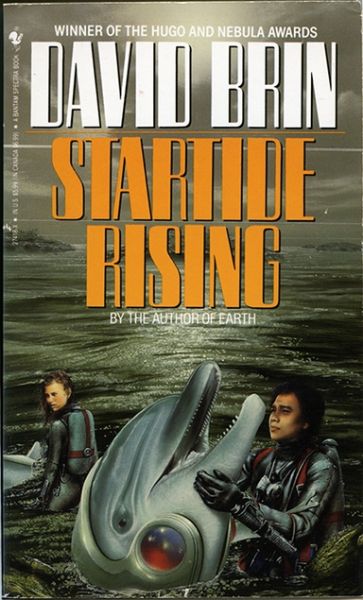
Then there’s David Brin’s Uplift Saga. While the first book doesn’t really mention FTL travel, when it came to the second, Startide Rising, I was amazed to discover that the various alien races (and there is a multitude of them) use a wide range of FTL drives to suit their temperaments.

Cover to David Brin's Startide Rising

I can’t remember the different types of FTL drive (Startide Rising is on my to-reread list), and I can’t remember if I still have GURPS Uplift, or where it is if I do still have it.

So I did the same with my series of first contact freeform larps. Here’s the current list:

  • Hyperdrives, which use hyperspace as a shortcut. Hyperdrives may still take many months to travel between stars, however.
  • L-points are nexus points between stars. Travel is instantaneous, but the points are often close to (or sometimes within) stellar masses.
  • Wormhole drives create wormholes between different parts of spacetime. Travel through the wormholes is instantaneous, but time is taken getting to and from where the wormholes can be created (deep space).
  • Star bridges are stable wormholes constructed between two locations. Travel across the star bridge is instantaneous.
  • The flow is an n-dimensional current that flow drives access. Travel using the flow is in one direction only.
  • Teleporters convert a ship and its contents into information sent through spacetime (at the speed of light) or a wormhole.
  • And some races even use slower-than-light travel.

Travel through conventional space is only possible at speeds below the speed of light. As a result, species that use STL often put their crews into cryosleep.

And we have a date for Aurora Horizon’s premiere

And we now have a date. After a bit of too-ing and fro-ing, I’m running it at the end of May.

The game files are mostly prepared, so between now and then I’m casting, sending out characters, redecorating the game space (a Discord server) and preparing the game instructions for when I run it again.

So I’ll have to think about something else to write about until then.

And after that: Consequences 2025

I’ve also submitted Aurora Horizon for Consequences 2025. That will be face-to-face in November, which means changing the format of handouts and contingencies, so I will do that over the next couple of weeks.

Aurora Horizon design notes

You can see other parts of my design notes here:

Part 1Part 2Part 3Part 4Part 5 (this one)

Sunday, 13 April 2025

Aurora Horizon design notes #4: The magic and the dip

I’m at that point in writing Aurora Horizon where I’ve written all the plots (in their own separate Word documents) and I’m now copying the text into the blank character template.

And it’s magical.

The process

Here’s what I do:

  1. Make a copy of my blank character sheet template. (Or, just as likely, take the last character I did and just delete all the old stuff.)
  2. Change the filename, title and footers to the new character.
  3. Copy the opening paragraphs that introduce the character and set the scene for everything that follows. (Although I deviated from this point, as noted below.)
  4. Go into each plot document and copy the relevant text (in this case, plot background, other people information and/or goals). As I do this, I colour the original text in the plot document purple, so I know I’ve copied it.
  5. Rearrange the text so it’s in an order that makes sense to the character. So the “important” background is covered first, with incidental bits coming later. I put the list of other characters (Other People) in cast list order. Goals are ordered roughly in line with the background, so the goals that I think are most important to the character are first.
  6. Read through the whole character and make sure it flows properly, editing and correcting as I do.

It’s amazing; each character is finished as soon as you’re done (and it only takes 15-20 minutes or so).

And because the work of writing the plots was done sometime in the past, it feels like the characters are popping out, fully formed, with barely any effort.

And suddenly, before you know it, you have a freeform larp virtually ready to run.

The dip

I haven’t found Aurora Horizon an easy freeform to write.

Many projects go through a challenging phase, a dip. Writing a freeform larp can be no different.

And I hit a dip with writing Aurora Horizon, which is probably the biggest dip I’ve had when writing any of these larps.

I think that maybe because Aurora Horizon has been a difficult freeform for me to write. I’ve not written an exploratory game before, so much of this is new to me. There are things I have ideas for, and some that I can’t figure out how to do. 

(As an example, I wanted to have some kind of memory overlay plot going on, but I couldn’t figure out how to do it justice. So I’ve canned it, which is a bit of a shame. And at one point I had a dead co-pilot, but I dropped that sub-plot as well.)

And there will be exposition dumps that I can’t see a way of avoiding.

Pushing through the dip

What I do know is that my process for writing freeforms works.

I knew I needed to “simply” push through the dip. Keep following the process. Write a plot. Then another one. Then another one.

But perhaps I shouldn’t have deviated from the process as much as I did. Before I start writing plots, I usually write the opening paragraph for each character so that I know something about them and how they fit into the game.

But I didn’t do that, mainly because I was struggling to figure out how to make the memory-loss-overlay plot work. So instead, to give me a boost, I wrote an easy plot first (stuff about exploring Callisto). And once I did that, things started to flow. And once things started flowing, I didn’t want to go back.

But as a result, I juggled character stuff with mission stuff, and invented the mechanics for exploring the alien ship as I went along. And I didn’t write those character introductions until after all the plots had been done, which wasn’t ideal.

Do the easy stuff first

Which brings me to a useful tip that helps me get through dips: do the easy stuff first. 

Doing the easy stuff first means I get in some early wins and start seeing progress. And with a little momentum, the trickier stuff won’t seem so daunting.

So I put the memory stuff on the back burner, and returned to it at the end. (It wasn’t quite what I was hoping for, but I’ll save that idea for another time.)

Online contingencies

I do have an idea for online contingencies, though.

I’ve struggled with online contingency envelopes because I haven’t worked out how to do them so players don’t read them before the game. 

But I’ve realised that I can give them a Word document with the text covered by black highlight, so it looks like it’s been censored. That way, they can only read it if they remove the black highlight, which they would have to do deliberately. 

And for those players who like to open their contingency envelopes before the game, it doesn’t stop them from reading them in advance.

It seems like such a simple solution that I can’t believe it’s taken me this long to think of it.

(The one catch is if a player doesn’t have MS Word, but I can do the same with a Google Doc if necessary.)

The light at the end of the tunnel

At this point, I can also sense that the game is almost finished. After the characters, I have a few handouts to compile and a timetable to flesh out – but that’s about it.

Then I will need to think about arranging its first run…

Aurora Horizon design notes

You can see other parts of my design notes here:

Part 1 – Part 2 – Part 3 – Part 4 (this one) – Part 5

Monday, 7 April 2025

Aurora Horizon design notes #3: Inspiration

I wish I could remember where all the inspiration had come from for some of the other games in the series. So for Aurora Horizon, I’m writing it down.

The Aurora Horizon

The overall design of the Aurora Horizon (as in the overall ball-on-a-stick look) is taken from the Discovery in 2001: A Space Odyssey (Arthur C Clarke and Stanley Kubrick). 

(In researching this, I thought I read somewhere that Discovery used a nuclear pebble-bed reactor, but I can’t find the source now.)

CORA 9000

CORA 9000 is the name of the Aurora Horizon’s computer system (a player in the game). The name is inspired by HAL 9000 (2001: A Space Odyssey, again) with a hint of Blake 7’s Orac.

Does CORA 9000 have an agenda of its own? I couldn’t possibly comment.

Aerobraking

The aerobraking manoeuvre in Jupiter’s upper atmosphere was inspired by Leonov doing the same in 2010: The Year We Make Contact.

It’s only in the background (although it causes serious damage to the Aurora Horizon), but still. That’s where the idea came from.

Cryosleep

Cryosleep has been a feature of SF ever since I started reading it (probably most influentially, ALIEN).  2010 also has cryosleep, and if I remember the book (2010: Odyssey 2) correctly, actually reversed the ageing process for the characters, which I liked.

The idea that cryosleep might cause harm was taken from The Legacy of Heorot by Larry Niven, Jerry Pournelle, and Steven Barnes. (Plus, of course, Traveller has its often-lethal low berths, which I’ve discussed before.)

Names of characters

The names of the human characters are either inspired by characters or their actors in 2001: A Space Odyssey and 2010: The Year We Make Contact or are taken directly from them.

For example, Commander Archer was inspired by Bowman.

The three Tau characters (Huey, Louie and Dewey) are named after the robots in Silent Running.

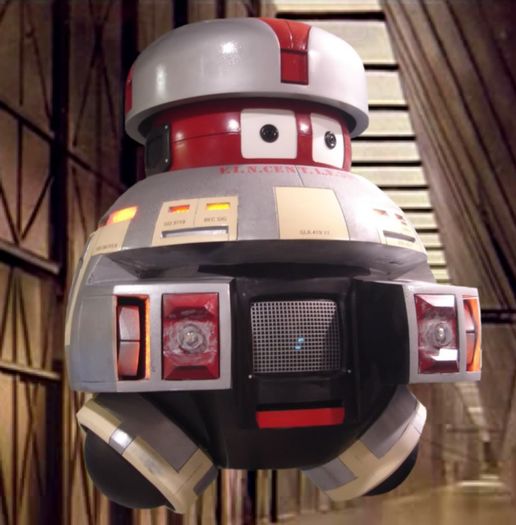
The ROV, VINCENT, is named after the robot in Disney’s The Black Hole. (Technically, VINCENT isn’t a character in the game, but anyway. That’s where I got the name from.)

Other influences

Some influences are a bit spoilery, so I will just list them here. You can read into them what you will.

  • Stark by Ben Elton
  • Europa Deep by Gary Gibson

Aurora Horizon design notes

You can see other parts of my design notes here:

Part 1 – Part 2 – Part 3 (this one) – Part 4 – Part 5

Monday, 31 March 2025

Aurora Horizon design notes #2: Contingencies

One of the things I’m thinking about for Aurora Horizon is having some characters with missing/faulty memories.

So part of the game would be about them recovering their memory – and coming to terms with things that aren’t as they originally thought they were.

The two main approaches that I can see are:

  • Putting the information in contingency envelopes (or GM handouts)
  • Providing all the information in advance and letting the player roleplay recovering memory.

Player preferences

I started a discussion on the ukfreeforms mailing list, and it became clear that some players prefer the surprise of in-game reveals, while others prefer to know everything in advance, as it allows them to think about how to play the character and integrate the information into their roleplay. 

So while some may enjoy the rollercoaster of unexpected twists, others prefer to know the key points ahead of time.

(And me? I don’t know – I’ve not done either. I suspect it depends on the game. I’ve written about it before, though.)

Should I ever create a second edition of Writing Freeform Larps, I will update the section on contingency envelopes to reflect this.

Contingencies

Contingency envelopes can be triggered by in-game events, by other players, or by time. (Or they may simply be handouts from the GM.)

Contingencies are a popular way of dealing with hidden information – I’ve used them.

For many players, opening a contingency is great – it’s like a small reward, and it’s exciting to find out what’s inside.

However, contingencies aren’t perfect:

  • Sometimes, the contingency is a disappointment and doesn’t contain anything new.
  • Reading lengthy information mid-game can be overwhelming for players with dyslexia or those for whom English is a second language.
  • Interrupting roleplay to read an envelope can disrupt the flow of the game.
  • Players might forget triggers and miss vital information. (I’ve certainly done this! Backup triggers may help here.)
  • If other characters reveal information before a player opens their envelope, it can be deflating.

Full disclosure

Providing all information upfront means putting all of the information in the character sheet in advance and explaining (through GM notes) how I imagine the character might be played.

This approach:

  • Allows players to plan their roleplay.
  • Enables players to foreshadow and create a richer character experience.
  • Reduces the burden on GMs.
  • Allows players to role-play their character’s surprise when appropriate.

However, not all players like this approach – especially those who enjoy being surprised by twists and turns.

I often use a full-disclosure approach for minor bits of information. So rather than use a contingency, I will often now write: “GM note: If you see item 25 (a painting), you recognise it as one that your grandfather painted and used to hang in your study. What is it doing here?”

I’ve yet to see a player abuse this, and it simplifies packing character envelopes.

Hybrid approaches

Of course, it is possible to combine both methods.

Players who like full disclosure can open their contingencies in advance. (The opposite isn’t quite so easy, of course.)

I may decide to have some parts of the game as full-disclosure but also have some contingencies for what I think are key secrets. (And if I really don’t want players to open them in advance, I could do them as GM handouts.)

Memory loss specifics

Amnesiac characters require a few special considerations.

  • Reveals should enhance a player’s experience, not detract from it. A contingency that completely changes a character’s nature should have some foreshadowing so it doesn’t feel too jarring.
  • It’s worth thinking about how the reveal is staged – giving it space and making it memorable. As a result, I am considering adding a psychologist/therapist character who can be the focus for recovering memories to give it a sense of importance.
  • Players should know that their character has lost their memory. Otherwise, they may assume that a lack of information indicates a badly written game. (We’ve all been there!)
  • Given the nature of memory loss, a single contingency could include too much information for a player to read and absorb while actively playing. So if possible, time “heavy” contingencies to suit any breaks.
  • Some players may not like receiving lots of new information during the game – something to consider as part of casting. 

Aurora Horizon

My plan is that Aurora Horizon is played over several scenes, and between the scenes, there will be time to open contingencies. So, as far as breaking the flow of the game and reading additional information, I’m less worried about that (but it’s still something to watch for).

I’ll probably end up with a mix of full disclosure (especially for low-impact stuff) with a few contingencies for the bigger secrets. 

Or I may bin this idea completely. We’ll see. I’m still writing.

Aurora Horizon design notes

You can see other parts of my design notes here:

Part 1 – Part 2 (this one) – Part 3 – Part 4 – Part 5

Monday, 24 March 2025

Aurora Horizon: design notes #1

Aurora Horizon is part six of my over-ambitious multi-part science-fiction first contact freeform larp. Previous episodes are: The Roswell Incident, All Flesh is Grass, Children of the Stars, Messages from Callisto, and The Stars our Destination.

This time, I decided to make some notes as I wrote the game. This is the first part.

The overall idea

In 2010, humanity sends a manned spacecraft (the titular Aurora Horizon) to investigate an alien spacecraft that has been parked on the surface of Callisto.

What do they find?

The problem

Writing Aurora Horizon as a ttrpg scenario would be easy. It’s a mysterious spacecraft with various things to discover. It would probably be a two- or three-session one-shot, I imagine.

But I’m writing it as a freeform larp for 13 players. 

And I must admit that I’ve been putting it off for a while, because it’s a bit tricky.

See, exploring a spacecraft (or a dungeon or a tomb or whatever) works fine as a ttrpg, but it’s not great for freeform larps.

Many years ago, I played in a 20-ish-player Lovecraft game, which included (among many other things) four of us exploring some catacombs below Arkham. While this was fine, it turned a larp into a ttrpg, which wasn’t really what I signed up for.  It also took one of the GMs out of the game, and I plan to run this on my own, so that’s not an option.

Whatever I do will need to be self-contained.

My plan

My plan is that the players will split into different groups at set times, when they go on EVA missions to explore Callisto or the alien ship.

They will choose an area to explore, and I will give them handouts explaining what they find. At the same time, there will be character-specific text.

My plan is to give them sufficient dilemmas to keep them occupied for 15-20 minutes before everyone reconvenes.

Inter-group communication

The game is set in 2010, and as a consequence, everyone can communicate with each other and see what’s going on via suit cameras.

My plan to deal with this is to let the players know that if they want to see what’s going on, they can.

They won’t be present, but they can respond, ask questions and offer advice. If they want to ask the captain something, they can.

(Although I’m not promising not to cut communications for dramatic effect.)

So that’s the plan so far.

Available to download

The first three episodes are available to download. Find them here:

The Roswell Incident (published by Freeform Games)

All Flesh is Grass (published by me on Itch)

Children of the Stars (also published by me on Itch)

(With the others to follow in due course...)

Aurora Horizon design notes

You can see other parts of my design notes here:

Part 1 (this one) – Part 2 – Part 3 – Part 4 – Part 5