Showing posts with label larps. Show all posts

Monday, 4 May 2026

Immersion in ttrpgs and larps

Every now and again, I see on Reddit and other places talk about immersion in ttrpgs and larps as being really important.

And because I’m not sure what that really means, I’ve tried to figure it out. 

(Clearly this isn’t the first time anyone has tried to do this, but this is my take on what immersion means to me.)

Define: Immersion

Asking Google (in April 2026) for a definition of immersion brings up this response:

Immersion (noun)

1. the action of immersing someone or something in a liquid.

2. deep mental involvement in something.

Google’s source is Oxford Languages.

#1 Immersion in a liquid

I’m pretty sure nobody in these discussions uses “immersion” to mean being immersed in a liquid. (Although Bubbles is an anthology of hot-tub larps, and Prawn is a larp set in a fish tank and held in a swimming pool. No doubt that players have joked about how immersive those games are. I know I would.)

Immersive experiences

But a broader interpretation of #1 would include immersive experiences, such as immersive theatre (such as Punchdrunk). The closest thing I’ve come to trying one of these was Alien War in London, back in the 1990s. (I’ve written about Alien War before.)

Sometimes these immersive experiences stretch the meaning a little. I think the idea of Van Gogh: The Immersive Experience is that you feel as if you are inside the painting. (I don’t know, I’ve not actually been – despite there being one on my doorstep.)

I’ve not done Bridge Command either. I hear it’s good, though I suspect you have to visit regularly to get the most out of it. If I went to London more regularly, maybe I would try it.

ttrpgs and larp

While I can imagine this kind of immersion in a larp, I don’t for a moment believe that this is what ttrpgers mean when they say immersion. Not unless the ttrpg they are playing is a game about modern-day folk playing tabletop roleplaying games.

And as far as larp goes, I think the idea is that a fully immersive environment lets players inhabit their characters without anything getting in the way.

Which sounds great, but I don’t work like that. I’m never not playing a game, and even immersive environments have elements that arguably drag players out from their immersion. (Some examples: Magic. Tracking wounds. Spectacles. Wheelchairs. Contrails. Power lines. Double-glazing.)

Worse, this kind of what-you-see-is-what-you-get feels a little too re-enactment-y to me. I remember watching magicians in a larp spend minutes casting their spells (drawing patterns in chalk, chanting, etc.), and it looked so boring to me. Can’t I just roll some dice? (And larps where you sleep in character? Ugh – I need breaks!)

Immersion of that sort isn’t a particular draw for me, but what about the second definition?

#2 Deep mental involvement

So this is the kind of immersion that works for me. I can get lost in a book. I can get lost in a video game. And yes, I can get lost in a ttrpg or a  larps.

But strangely, the immersion is different for ttrpgs and larps.

ttrpg/larp immersion as a player

Playing ttrpgs: In ttrpgs, I rarely experience immersion as a player. As a player, there are too many distractions for me to be completely immersed – and that’s not helped by the spotlight nature of ttrpgs. With four players and a completely fair GM, then I am only “playing” for 25% of the time. The rest of the time I am waiting and watching – which is fine, but not particularly compelling, and I’m unlikely to feel “deep mental involvement.” (I hate combat in ttrpgs for this reason. It’s so dull.)

Playing larps: But in larps, the percentage of time that I’m actually playing (rather than waiting or watching) is much, much higher. In the larps I enjoy, pretty much everything I need to resolve my character’s goals is held by other players – so there’s very little downtime. (In a weekend-long freeform larp, I will typically interact with the GMs for only a few minutes in total.) And so I find them much more involving and therefore immersive. The times I hate larps are when I’m bored – which usually means I don’t have enough to “do.”

ttrpg/larp immersion as a GM

As a GM, things are flipped.

GM-ing-ttrpgs: I find GM-ing a ttrpg completely absorbing. I’m fully focused on the players and on managing the game, the rules, and everything else. I’m completely immersed in the game – I don’t have the time to be distracted.

GM-ing larps: But in a larp, particularly the freeform larps I like to write and run and play, GM-ing is often a very passive activity. Once the game is set up and running, players often don’t need the GM. I am often only there for when the players need to interact with the world, and often they don’t need me much at all.

Immersion ≠ staying in character

It’s worth noting that for me, immersion does not mean staying in character. When I’m playing a larp I drop in and out of character quite often – but I’m still completely immersed in the game. (I find it hard to actually stay in character – I’m always playing a game.)

Other forms of immersion

So far so good, but “immersion” seems to have other meanings in ttrpgs and larps.

Immersion = staying in character

Having said that, for me, immersion does not mean staying in character; I recognise that the opposite is true for others. (As I’ve said, I’m lousy at staying in character.)

In fact, the Nordic Larp Wiki has this definition for immersion: Immersion" refers to a state of mind where a player does not need to actively suspend disbelief in the fictional universe, and where role-playing flows as naturally and easily as if you really were the character.

So I think this is about how much a player feels like they are their character and that they are in the game world. How real does it feel in their imagination?

If so, then immersion-breakers are things (in the rules or how the game is played) that pull players out of the game and their characters. (I’m not quite sure why things like rolling dice don’t pull you out of character, but presumably they don’t.)

While I see this in others (or hear about it in larp stories), it’s not something I experience myself. That’s because it’s always a game; I’m always just Steve. (Some people cry. I’ve never cried in a game.)

But maybe it’s a campaign thing? I suspect that over a number of sessions, ttrpg players become attached to long-running characters and may experience this kind of connection. I’ve never played a campaign longer than a dozen sessions or so; I’m usually itching to play something else by that point. So that’s never been me.

Anyway, as I’ve explained, that’s never been me.

Breaking immersion: collaborative world-building

When I am a GM, I like my players to help build the world. I’m a fan of Jason Cordova’s “paint the scene,” so when my PCs enter a new location or meet a new NPC, I might ask them something like, “What tells you that the owner of this store is struggling to get by?” 

But some players don’t like this. As far as I can tell, they feel that the GM should come up with these details. It’s suggested that answering meta-questions like this will break their immersion. 

(As a player, I like this sort of thing.)

Is immersion a player-only thing?

There may also be a player/GM difference. I’ve seen it suggested that those of us who are GMs first and players second (which is certainly true of me), don’t lose their GM-mindset when playing, so they still think about the metagame rather than getting wrapped up in their character.

And as a result, the feeling of character immersion (however you measure it) may be less important to them than to someone who is mostly a player.

But that’s just a theory. I don’t think it’s been tested.

Immersion: Am I any clearer?

Yes, I think so.

For me, immersion is important – but for me it’s the kind of immersion that means I am fully absorbed by something. (And even then, I don’t get that from all aspects of playing ttrpgs and larps.)

The other kinds of immersion? Not so much.

Friday, 1 May 2026

Peaky 2026

I played two great games at Peaky 2026: Triremes in Space and Grease Point Blank. (These are working titles and may change.)

Triremes in Space

Triremes in Space is a 12-player game of Ancient Greeks in space, written by Helen Jones, Megan Jones, Michael Jones, and Ewan Munro. 

Hang on, Ancient Greeks in space? Yes - and this isn't even an original idea! As Megan explained to me afterwards, she was inspired by the second-century travelogue/novella A True Story by Lucian of Samosata, in which Lucian and his crew are blown into space and have a series of adventures. I've never heard of it before, and it's arguably the first ever SF story. 

Spider battle from A True History by William Strang, Public domain, via Wikimedia Commons

Anyway, I was playing Selene of Luna, leader of the Moon people. And I was meeting humans from Terrus for the first time - Spartans, Corinthians and Athenians. All hated each other, and yet I somehow needed to get them to help me with my problem with the sacred cows on the Morning Star...

Structurally, Triremes in Space starts with four factions, with three characters (broadly a leader, a ship's pilot and a warrior - although some factions may have had a different mix). The factions may be enemies or allies – or in the case of the Moon people, unknown.

The Moon people were delightfully alien, and as I was meeting humans for the first time, I enjoyed misunderstanding them and (hopefully) being unclear.

Amazingly, I achieved all my important goals - although it turned out that one of my advisors was deeply dodgy, and I had no idea!

It was also helpful having one of the authors (Ewan) as my other advisor. Inevitably, we hit bits of lore that hadn't been fully explored, and he provided the explanation while also filing the question and answer away for later.

Grease Point Blank

Grease Point Blank is a 12-player 1969 high-school reunion game inspired partly by the movies Grease and Grosse Point Blank. It was written by Nickey Barnard, Philippa Dall, Heidi Kaye, Tony Mitton and Christi S.

I couldn't believe my luck when I opened my character sheet: I was playing the John Cusack character! Okay, I'm trying not to spoil this, so I'm not going to say who I was playing or what happened. But it was so much fun, there was angst, drama, unexpected attention and maybe even murder.

I think my favourite moment was a completely unexpected conversation with Graham, but the game was filled with lovely moments.

Other games

Two other games were also written at Peaky 2026. I didn’t play them, but it sounded like they went well.

For The Greater Good by Adam Hayes, Kirstine Heald, Kevin Jacklin, Peter Jones, and Julie Winnard. Strange goings on in an English village for 8 players.

Lord Gount's Expedition by Clare Gardner, Martin Jones, Alli Mawhinney and Rich Perry. Sailpunk, for 8 doomed players. (I may have got the title for this one wrong.)

And you'll notice I didn't write a game this time. That's because I started, but it didn't work out. That happens sometimes. I ended up talking about Cafe Casablanca and helped proofread For the Greater Good.

Sunday game scheduling

And I have to say, Sunday was lovely. Only four games were running, and that meant that instead of trying to cram three sessions and lunch into about seven hours, everything was much more leisurely. 

So our schedule was:

  • 8:30-9:30 Breakfast
  • 9:30-12:30 First game slot (Triremes in Space and For the Greater Good)
  • 12:30-13:30 Lunch
  • 13:30-16:30 Second game slot (Grease Point Blank and Lord Gount's Expedition)

So that was a very leisurely three hours for each game. Nothing felt rushed, and we had loads of time for feedback and relaxing between games. 

(Sometimes we have six games running at Peaky. So that means an additional slot, and all the slots are only two hours long with very little space in between. And lunch is either very early or very late. And no, we can't push into the evening because some people have to leave, and others want to just chill after a busy weekend.)

I'd like to suggest we do that every Peaky, but that means having more games that aren't ready to be run. Is that a bad thing? Maybe not.

Click here to learn more about Peaky.

Monday, 23 March 2026

My larp origin story

Prompted by Mo Holkar’s thoughtful reflections on how he started larping, I thought I’d do the same. My memory is hazy over a lot of this, as it was a long time ago.

1981: Traveller

Traveller was my first ttrpg. I was a science fiction fan before I was a roleplayer, so it was only natural that I was drawn to Traveller. (I’ve written before about how I stumbled across Traveller.) 

At the same time, White Dwarf began being distributed in newsagents. I bought every copy, and I remember reading about Treasure Trap (probably the UK’s first larp) in issue 31 (June/July 1982).

I was intrigued by Treasure Trap, but larp/lrp didn’t appeal as I wasn’t interested in fantasy. I was an SF fan.

Why didn’t I like fantasy?

Back in the late 70s and early 80s, when my tastes were forming, SF was much easier to get hold of than fantasy. Yes, there was some (Tolkien, Moorcock, Eddings, Donaldson, Le Guin), but I found none of it as interesting as the worlds of Heinlein, Niven, Pournelle, Drake, Zahn, Clarke, Haldeman, Shaw, Foster and more.

Plus, there was Star Wars and 2000AD. Fantasy had nothing like that.

And even if fantasy had been easier to get hold of, I found them ponderous multi-part epics anchored in the past. I much preferred to explore bright futures full of spaceships, aliens and distant planets. I always have.

1987: Larping friends

In 1987, I became friends with some larpers in Brighton. I didn’t actually do any larping, but I knew about it and saw their costumes and elf ears. I wasn’t very athletic, and running around the woods trying to hit things with rubber swords really didn’t appeal.

Neither did the costuming. I guess my longstanding disinterest in costuming set in then. I remember visiting the Loughborough University larp stall (I’m guessing this was fresher’s week in my final year) and noting that they expected you to have your full costume by the third week. That put me off, and I never signed up.

I attended a games convention in London (Games Day 87?) where a few rooms were set aside for a short dungeon-style larp. The only thing I can remember about it was a room where the PCs had to defeat an NPC champion (named Achilles) by hitting his foot.

Late 80s/Early 90s: Aslan and The Freeform Book

The 1980s were a great time for fanzines, amateur magazines about roleplaying games published for love. I subscribed (and contributed) to a few, including Andrew Rilstone’s Aslan. In Aslan, Andrew described something called a “fantasy party,” which is what I would now call a freeform/chamber/parlour/interactive larp. It sounded fantastic – thirty or so people all playing the same political game. I wanted to play!

Brian Williams writes about Andrew’s fantasy parties in more detail here (he attended them).

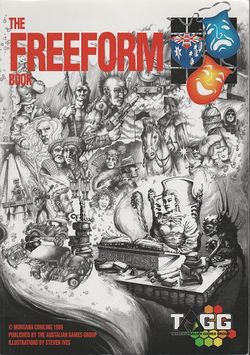
Somewhere around this time, they started being called “freeforms” (to make them distinct from regular larps). The name was probably inspired by Morgana Cowling’s The Freeform Book, published in 1989. (I now call them “freeform larps” or “parlour larps” or “chamber larps” depending on who I’m talking to.)

1992: Home of the Bold

In 1992, I finally got to play in a freeform.

Home of the Bold was held at Convulsion, a Chaosium-themed convention run by David Hall (of the Tales of the Reaching Moon Gloranthan fanzine). Written by Kevin Jacklin and David Hall, Home of the Bold was amazing – and changed my life. I had a wonderful time, made lifelong friends and decided I wanted to do more of these crazy games. 

In costume at Count Stolwitz in Home of the Bold
Me as Count Stolwitz in 1996 playing Home of the Bold.
Possibly the earliest photo of me larping...

(I’ve now played Home of the Bold three times – the last time at Continuum in 2024.)

Home of the Bold was exactly what I was looking for – a game that was like a city filled with interesting people all pursuing their own agenda. While regular larping seemed to me to be little more than tabletop roleplaying done standing up (players went on adventures and there were monsters to battle), this was something very different.

I also realised that if you removed the SF/fantasy nerd elements, freeforms might be a great way to introduce people to roleplaying.

1992 to 1995: Eleventh Hour and more early freeforms

In this period, I played in a couple more freeforms and a “proper” larp, Eleventh Hour.

Freeform larps

In 1994 I played Life of Moonson, again at Convulsion. It was a more heavily Gloranthan freeform, and I can remember very little about it other than I had a ridiculous costume. I think I also played Last Voyage of the Marie Celeste then, playing a vampire. One of the characters in the game was the ship’s cat, which might be fine for some players, but I’m glad that wasn’t me!

Eleventh Hour

Eleventh Hour was a series of weekend fantasy larps that Lynne Hardy (whom I first met in Home of the Bold) invited me to. I played in two events, both held in youth hostels on the Welsh border. I played the same character, a devious scribe, and they were fine. I wasn’t bowled over by them, and much of the time it felt like we were making our own entertainment.

One thing I remember about the second larp is the big set-piece battle, which, as a non-combatant, I sat out of. I remember watching the magic users drawing chalk circles and chanting and thinking, “That looks so dull. I’d much rather roll some dice. I want to pretend I’m casting spells, I don’t want to actually do it.”

(So, as well as a disinterest in costuming, I’m not that interested in the reenactment-y elements of larp.)

1995: Café Casablanca

In 1995, Kevin Jacklin and David Hall (and their friends) brought Café Casablanca to the UK, held in a hotel in Nottingham. I had heard about Café Casablanca because at Continuum, Sandy Petersen would talk about it – I think he was one of the authors, although the game is credited to Cruel Hoax Productions.

Café Casablanca was incredible. I ended up falling in with the Resistance, and we were hopeless because we were infiltrated by a German spy. So they knew everything! 

Café Casablanca was followed in 1997 by The King’s Musketeers and in 1997 by 1897: Queen Victoria’s Diamond Jubilee, all written by Cruel Hoax Productions. And pretty much since then, a weekend freeform has been held at the Retford Best Western Hotel. This year it was Gateways, and next year it will be Café Casablanca’s fourth outing. (More details here.)

Mid to late 90s: A variety of freeforms

So, in the mid-to-late 90s, things freeform are picking up. The weekend games became a fixture on the calendar, and freeforms were a regular part of Continuum (Convulsion’s successor), and I was playing similar games at other conventions (such as UK Gencon).

Playing An Incident at Two Bridge Junction
An Incident at Two Bridge Junction

Some other notable events of that time – I don’t have exact dates for these.

  • I set up the UKFreeforms mailing list so that UK writers and players could stay in touch and discuss freeforms. It has changed providers a couple of times, but it still exists, and you can join it here
  • I joined the Continuum committee for two conventions as the freeform wrangler.
  • I wrote An Incident at Two Bridge Junction, a six-player wild west vampire freeform. I played it with friends a couple of times.
  • I wrote Death on the Gambia, but more on that shortly.
  • I co-wrote Midsummer Mischief, a 25-player PG Wodehouse freeform. My first “big” freeform, I learned a lot about collaborating on a game. Midsummer Mischief was first run in 1998, and the files can be downloaded from this page.

1999: The Bradford vampire larps

Inspired by White Wolf’s The Masquerade (the larp rules for their Vampire: the Masquerade ttrpg published in 1993), a group of larpers decided to hold a vampire larp in the 1 in 12, an anarchist nightclub/social centre in Bradford. I can’t remember how I found out about this, but I remember heading off in a friend’s VW van and playing at being vampires overnight. While I have vague memories of hanging out in the club (I have no idea if there were any regular patrons in the club that night – it was hard to tell), I remember a few things:

  • I have no idea if there was a plot. I suspect there was, but I suspected it involved the GM’s friends. (That was my experience of several larp events – including a couple of big ones at UK Gencon. If you weren’t part of the clique, you had to make your own fun.)
  • Characters were based on a point-buy system (based on The Masquerade, I think). However, we were playing in a nightclub, and if you wanted to eat or drink, you needed a particular ability. So, of course, we all needed that ability because we were playing in a nightclub! (But I think most players just ignored it.)
  • The GMs had an insanely unsafe rule about firearms. Basically, if you wanted your character to have a gun, it needed to fire blanks! A toy gun firing caps was no good. (They clearly hadn’t done a risk assessment.) Luckily, nobody was hurt – although the armed response squad was called out one night because there had been five reported shootings in Bradford that night!

Thankfully, the larp only lasted for two or three sessions. (Or perhaps I just drifted away.)

Late 90s: Murder mystery larps

One of the friends I made in Home of the Bold was Dixon Jones, who ran Initiative Unlimited and ran larps as team-building exercises for businesses with Adam Hayes and David France. They also hosted occasional murder mystery evenings, and I attended one in London with my brother.

They also sold murder mystery party games as pdf downloads, and I became an affiliate, creating a now-defunct website, Run Your Own Murder Mystery Games and earning a commission every time I sold a game.

Their games were fine, but I wanted to write and sell games with a little more depth and complexity. Such as Death on the Gambia, an introductory larp that anyone could play. It didn’t have a murder in it, and after failing to sell it to anyone, I realised I would have to create my own company. But I wasn’t sure how to do that.

As I entered the new millennium, I was playing more and more freeform-ish larps. I had found what I was interested in. Importantly, I played some of Epic Experience’s games at Gencon UK and other conventions. And through Epic Experience, I met Mo Holkar.

2001: Freeform Games and Peaky

In 2001, two key events occurred: Freeform Games and the first Peaky writing weekend.

Freeform Games

In the summer of 2001, I called Mo and suggested we form a company that would sell freeform larps as murder-mystery games. I suggested we call it Freeform Games (perhaps not my wisest choice of name). Fortunately, Mo agreed. Even better, he had set up businesses before, and as a result, on 9 October 2001, Freeform Games was born. 

Shortly after that, we released our first game, Death on the Gambia. We now have more than forty… 

Peaky

In November 2001, 20-ish enthusiastic members of the uk-freeforms mailing list met in a converted farmhouse in Edale in the Peak District (hence, Peaky) over a weekend (Friday to Sunday) to write a freeform. Or more accurately, three freeforms.

The first time we met, it was a challenge to see if it was actually possible to write playable freeforms in a weekend. And we surprised ourselves – the first was ready by Saturday evening, and we played the other two on Sunday.

That first Peaky was so successful that the weekends are now an annual event and are my favourite gaming weekend of the year. Although they're no longer held in the Peak District...

2001 and beyond

Since then, both Freeform Games and Peaky have continued to thrive, and I’ve continued to play more and more freeforms. And that’s where my larp focus has mainly been ever since.

I have found the kind of larps I like, and happily, I have the space to run, write, and play them.

Friday, 20 February 2026

Box Northern Larp festival

On Valentine’s Day this year, I left my wife (I know, she had words…) and went to the one-day Box Northern Larp Festival in Headingley, Leeds.

This was Box’s second outing – the first was back in 2024 in Sheffield. I couldn’t make it then, because it clashed with the weekend freeform in Retford. This year, the dates didn’t clash, and so I went to both.

The HEART of Headingley

The venue for Box was Headingley’s HEART Centre, an old primary school repurposed into a community, enterprise and arts centre. There’s a café and several businesses operating from the building – but most importantly, a number of accessible rooms that can be hired.

With eight larps on offer (four in the morning, four in the afternoon), BOX needs plenty of rooms!

If I have one (minor) criticism, it’s that parking in Headingley isn’t great. BOX encourages everyone to use public transport, but I’m a 30-minute drive away or a 90-minute-plus bus ride. So it’s no contest, unfortunately.

So I arrived early to make sure I could find somewhere to park. I wasn’t the earliest, though, and soon found other larpers. And as we were early, a few of us headed to the café to get a hot drink and start making introductions.

(I saw a few friendly faces – Mo, Daniel, Heather, Ian, Emory, Nyx and maybe a couple of others. And I made more friends.)

Both of my games were in Ridge, at the top of the building. For those with accessibility needs, there’s a lift.

Arsenic & Lies (10 am – 2 pm)

My first game was Arsenic & Lies by Karolina Soltys and facilitated by Hazel Dixon.

Arsenic & Lies is a replayable murder-mystery larp for 5-12 players that lasts three hours. It uses a deck of cards to randomly assign relationships, secrets, and the murderer.

Set in a grand house at a New Year’s Eve party on 31 December 1919, a new decade is about to start – but not for everyone!

The game is played in three parts: character creation, Act 1 (at the end of which the murderer strikes) and Act 2 (at the end of which we decide who to hand over to the police).

I played war hero Lt. Joe Middleton and was married to my lovely wife Violet (who was having an affair unbeknownst to me). I had come back from the war a changed man – I had lost my faith in god.

(I also became embroiled in two other characters’ backstories – both deserters, oddly. There must have been something in the water.)

I wasn’t the murderer – but I was influential in persuading the group to vote for the deeply dodgy Harry Ryland. I had no idea if Harry was the murderer, but his character suggested that he certainly could have been the murderer, and that was enough for me. And my arguments were strong enough that we handed him over to the police – leaving the actual murderer, Lady Beatrice, to escape!

Arsenic & Lies works really well. It creates a lot of game from a single deck of cards, and I can imagine playing it again fairly soon. We had a dedicated host for the game, but having played it once, I’d be happy to host and play Arsenic & Lies simultaneously.

(I’ve also put a review of Arsenic & Lies on my Great Murder Mystery Games website.)

Lunch

We finished Arsenic & Lies shortly before 2 pm. There was a 30-minute wait for food in the café (I think we might have been the last game to finish), so I went around the corner and into Headingley with a couple of other players to grab a bite to eat.

A Haunting in Hartwick (3 pm – 7 pm)

I ran A Haunting in Hartwick in the second slot. A Haunting in Hartwick is a murder mystery larp (two murder mysteries in one day!) written by Mark Schaefer that I’m developing for Freeform Games. It’s pretty much done – this was one of the playtests. Here’s the setting:

It is 1958, and Quinn Hartwick is selling the ancestral home in Hartwick, Connecticut. The new owner will be Blake Crowley, who plans to turn it into a "spirit sanctuary" for ghosts. But not everyone thinks this is a good idea…

I’m always slightly nervous about running our games for “proper” larpers. I’m well aware that the games are introductory larps, designed for people who don’t normally do larping. So it was delightful to see that the players take the game and run with it.

One thing that makes Box different from other places where I might run larps is that it doesn’t allow character assignment in advance. This has positives and negatives.

Positives of casting at the door

I don’t have to worry about casting questionnaires. Instead, I laid out the character envelopes and let people pick them based on the character's name. (Except one – I thought that Daniel might enjoy the scientist character, so I gave that character to him.)

It helped that all the characters were ungendered, so it didn’t matter who played which character.

I didn’t have to send characters out in advance. I can’t be the only person who hates this part of larp admin!

Flexibility in moving players between the groups. This approach makes it easy for the organisers to move players between the groups. Box had a couple of no-shows, and I had one character move from one game to mine.

Negatives of casting at the door

No costuming: No pre-casting did mean no costuming, but that didn’t prevent anyone from getting into character and having fun.

Barely a costume in sight - just one lab coat

Allow time for pre-reading: Of course, assigning characters at random meant I had to give my players plenty of time to read their characters first. But I allowed for that, and the pre-game notice warned that there would be reading.

Feedback

Anyway, the game went great, and the players picked up a couple of things that I need to look at. Nothing significant, just a few tweaks that will make the game run smoother – I’m pretty sure we will release it next month.

Delightfully, partway through the game, a player told me that they had already played and enjoyed two of our games, which was lovely to hear.

Overall

So Box was great. I wrapped up a little after 6 pm and chatted to the organisers for a bit before heading home for tea. I hope to make it next year.

For another take, here's Mo's review.

Wednesday, 8 October 2025

Halloween Night

Over on my Great Murder Mystery Games site, I’ve written a review of Halloween Night, an interactive murder mystery for 8-24 people (and a host) aged 18+ and published by Murder and Adventure Games in the UK. I’m not sure who the author is, as they are uncredited.

The game is set in 1892 Transylvania, at the castle of Count and Countess von Falcate. There, a tour party gathers for a social evening. Unfortunately, tragedy has struck lately – three local villagers have been savagely attacked and murdered. But who did it?

You can read my full review here.

Thinly-disguised larps

Halloween Night occupies the same sort of space as our Freeform Games’ murder mystery games – they’re thinly-disguised larps.

However, although neither company uses the term “larp” when describing the game, I think Halloween Night assumes a greater level of responsibility on the GM than we do. We provide a lot of help to hosts because we understand that hosting a larp is a significant step.

Halloween Night, unfortunately, expects more from a host (as I explain in my review).

And although Halloween Night doesn’t say who is behind it, I think one of the people involved is Richard ‘Doc’ Williams (who you can see in some of the videos on their YouTube channel). He used to run freeform-type murder mystery games at RPG conventions back in the late 80s/early 90s.  I may even have played one of them – I’m not sure.

Failed crowdfunding

Interestingly, I’ve just found this failed 2024 crowdfunding page for it.  Curiously, although it failed, they haven’t posted an update announcing the final game to potential backers. Perhaps you’re not allowed to do that.

(I’m not sure they got their marketing right – I would have been a key target for this, yet I didn’t hear about it until August 2025.)

Will I run it?

Yes, probably.

I’d like to run it to see how it works and how it compares to both our murder mystery games and also other modern freeforms. But I’m not sure when or where. 

Monday, 5 May 2025

Peaky 2025

The last weekend of April saw me at the annual Peaky Games writing weekend, where 30 or so crazy fools gather to write and play freeforms. It’s my favourite gaming weekend of the year – friends, food, creativity, stress – and not enough sleep.

This year five games were written, Enemies of the Federation, On a Hot Summer’s Night, Miss Maypole: A Study in Saffron, Nodding Donkeys, and Ldrbrd.

Spoilers ahoy! (Perhaps just think of this as something to whet your appetite.)

Enemies of the Federation

Enemies of the Federation is for nine players. Criminals’ personalities have been extracted from their cryosleeping bodies to operate repair mechs to save their stricken prison ship. But things aren’t exactly what they seem.

I co-wrote Enemies of the Federation with Kath Banks, Megan Jones and Peter Jones. The core idea was Peter’s – the game is partly a balloon debate as the players discover that although there are nine personalities, they only have three bodies to return to. (Each personality has been extracted three times.)

Although the personalities weren’t identical (we made slight personality differences to each - althought this didn't really come out in play), it meant that there were three core characters. As the others were happy to write the characters (and to be honest, I suspect my terse writing style would not have been to everyone’s taste), I stepped back from that job and wrote the background document.

I was rather pleased with my background document. Instead of writing a normal background, I wrote it in the form of three year 5 lesson plans: the history, the geography, and one covering unhappy people. This let me write the background in bullet points, while hinting at the dystopian future the players would find themselves in. (The Federation is more Blake’s 7 than Star Trek, and each lesson plan finishes with an instruction to sing the Federation anthem.)

So that didn’t take me much time, so I had enough time to reformat an old game, An Ecumenical Matter, into a more polished format. That’s something I’ve been meaning to do for years, so it was nice to get that finally done.

The game seemed to go well, and the players said they enjoyed it. It ran for about 90 minutes, which seemed about right. I’m not sure what I would do to make it a longer game – we’d need more events and stringing a few discoveries out.

Then it was time for Nodding Donkeys.

Nodding Donkeys

Nodding Donkeys was written by Dave Collis, Adam Hayes, Kevin Jacklin, Michael Jones, Ezzy Pearson and Julie Winnard. Inspired by Slow Horses, it featured washed-up spies on a training course. For 8 players.

I played agent Possum, one of the Nodding Donkeys, spies who have been put out to Croydon House, where they can do no harm. Possum was an old-school spook, a little like Slow Horses’ Jackson Lamb, but without being as scarily competent (or gross) as Lamb is. So I embraced my inner Gary Oldman and enjoyed being old-fashioned and pretty obnoxious.

One thing I really liked was that each character had “superpowers” (abilities) and flaws, but to use a superpower, you had to display (somehow) one of your flaws. That seemed to work really well.

It was a lovely game, with a few rough patches here and there (but that’s always true of Peaky), and was my favourite game of Peaky 2025.

With the spies put to bed, it was time to go all Agatha Christie.

Miss Maypole: A Study in Saffron

Miss Maypole: A Study in Saffron was written by Graham Arnold, Nickey Barnard, Clare Gardner, Heidi Kaye, Sue Lee, Christi S and Mike Snowden. It is the third (and apparently the last) of a series of murder mystery freeforms written at Peaky, and is for 14 players. 

Anyway, I played the village verger, campanologist and budding archaeologist. While I had a few goals, none of them (I think) related to the murder, but that was okay – this was a game with a lot of convoluted plots, which I always enjoy.

Unfortunately, the verger felt a little underwritten. The stuff I was interested in was fine, but it felt tangential to the main plot (the murder and the film crew). I had a lovely time, but noticed that during the last third of the game, I was waiting for something to happen. I imagine that’s just a reflection of Peaky – a balanced 14-player game is hard to write in so little time at Peaky. Once polished and tightened up, I’m sure the verger will have enough to carry them through the game. (I don’t know if abilities are planned for the game, but a few might help.)

Interestingly, I wrote about the previous game back in 2016, and noted that I ran out of plot during that one as well. 

And with that, Peaky was over for another year.

On a Hot Summer’s Night and Ldrbrd

I didn’t play either of these games, but I heard good things about both.

On a Hot Summer's Night was written by Natalie Curd, Nick Curd, Phil Dall and Tym Norris. It’s a 1920s Buffy the Vampire Slayer game with vampires and a hellmouth, for 10 players, but I know little more about it than that.

Ldrbrd written by Jenny Donne, Kirstine Heald, Tony Mitton, Ewan Munro and Malk Williams. Ldrbrd features arcade game characters who are competing to avoid deletion, and is for 12 players.

Monday, 21 April 2025

FTL in the Harvesters universe

In science fiction, each “universe” has its own FTL travel.

Star Trek has warp.

Star Wars and Larry Niven’s Known Space have hyperdrives.

Babylon 5 has hyperspace.

Alan Dean Foster’s Commonwealth books have the KK Drive.

Cover to Orphan Star featuring Tim White's KK-drive starship
Tim White's KK-Drive starship

Dune has space folding. 

Allen Steele’s Coyote series has star bridges.

The Mote in God’s Eye (Larry Niven and Jerry Pournelle) has the Alderson Drive.

Traveller has jump drive.

John Scalzi’s Interdependency Series has the Flow. (And here’s a short story about its origin.)

The Expanse has the ring gate and its slow zone.

So each universe has its own way of breaking the rules of physics and travelling faster than light.

And many of them are the same kind of thing, just relabelled.

The Uplift Saga

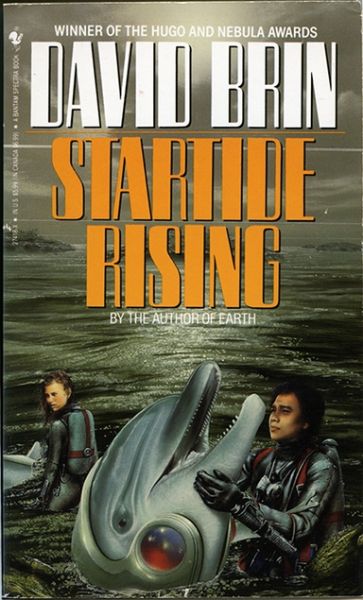
Then there’s David Brin’s Uplift Saga. While the first book doesn’t really mention FTL travel, when it came to the second, Startide Rising, I was amazed to discover that the various alien races (and there is a multitude of them) use a wide range of FTL drives to suit their temperaments.

Cover to David Brin's Startide Rising

I can’t remember the different types of FTL drive (Startide Rising is on my to-reread list), and I can’t remember if I still have GURPS Uplift, or where it is if I do still have it.

So I did the same with my series of first contact freeform larps. Here’s the current list:

  • Hyperdrives, which use hyperspace as a shortcut. Hyperdrives may still take many months to travel between stars, however.
  • L-points are nexus points between stars. Travel is instantaneous, but the points are often close to (or sometimes within) stellar masses.
  • Wormhole drives create wormholes between different parts of spacetime. Travel through the wormholes is instantaneous, but time is taken getting to and from where the wormholes can be created (deep space).
  • Star bridges are stable wormholes constructed between two locations. Travel across the star bridge is instantaneous.
  • The flow is an n-dimensional current that flow drives access. Travel using the flow is in one direction only.
  • Teleporters convert a ship and its contents into information sent through spacetime (at the speed of light) or a wormhole.
  • And some races even use slower-than-light travel.

Travel through conventional space is only possible at speeds below the speed of light. As a result, species that use STL often put their crews into cryosleep.

And we have a date for Aurora Horizon’s premiere

And we now have a date. After a bit of too-ing and fro-ing, I’m running it at the end of May.

The game files are mostly prepared, so between now and then I’m casting, sending out characters, redecorating the game space (a Discord server) and preparing the game instructions for when I run it again.

So I’ll have to think about something else to write about until then.

And after that: Consequences 2025

I’ve also submitted Aurora Horizon for Consequences 2025. That will be face-to-face in November, which means changing the format of handouts and contingencies, so I will do that over the next couple of weeks.

Aurora Horizon design notes

You can see other parts of my design notes here:

Part 1Part 2Part 3Part 4Part 5 (this one)

Sunday, 13 April 2025

Aurora Horizon design notes #4: The magic and the dip

I’m at that point in writing Aurora Horizon where I’ve written all the plots (in their own separate Word documents) and I’m now copying the text into the blank character template.

And it’s magical.

The process

Here’s what I do:

  1. Make a copy of my blank character sheet template. (Or, just as likely, take the last character I did and just delete all the old stuff.)
  2. Change the filename, title and footers to the new character.
  3. Copy the opening paragraphs that introduce the character and set the scene for everything that follows. (Although I deviated from this point, as noted below.)
  4. Go into each plot document and copy the relevant text (in this case, plot background, other people information and/or goals). As I do this, I colour the original text in the plot document purple, so I know I’ve copied it.
  5. Rearrange the text so it’s in an order that makes sense to the character. So the “important” background is covered first, with incidental bits coming later. I put the list of other characters (Other People) in cast list order. Goals are ordered roughly in line with the background, so the goals that I think are most important to the character are first.
  6. Read through the whole character and make sure it flows properly, editing and correcting as I do.

It’s amazing; each character is finished as soon as you’re done (and it only takes 15-20 minutes or so).

And because the work of writing the plots was done sometime in the past, it feels like the characters are popping out, fully formed, with barely any effort.

And suddenly, before you know it, you have a freeform larp virtually ready to run.

The dip

I haven’t found Aurora Horizon an easy freeform to write.

Many projects go through a challenging phase, a dip. Writing a freeform larp can be no different.

And I hit a dip with writing Aurora Horizon, which is probably the biggest dip I’ve had when writing any of these larps.

I think that maybe because Aurora Horizon has been a difficult freeform for me to write. I’ve not written an exploratory game before, so much of this is new to me. There are things I have ideas for, and some that I can’t figure out how to do. 

(As an example, I wanted to have some kind of memory overlay plot going on, but I couldn’t figure out how to do it justice. So I’ve canned it, which is a bit of a shame. And at one point I had a dead co-pilot, but I dropped that sub-plot as well.)

And there will be exposition dumps that I can’t see a way of avoiding.

Pushing through the dip

What I do know is that my process for writing freeforms works.

I knew I needed to “simply” push through the dip. Keep following the process. Write a plot. Then another one. Then another one.

But perhaps I shouldn’t have deviated from the process as much as I did. Before I start writing plots, I usually write the opening paragraph for each character so that I know something about them and how they fit into the game.

But I didn’t do that, mainly because I was struggling to figure out how to make the memory-loss-overlay plot work. So instead, to give me a boost, I wrote an easy plot first (stuff about exploring Callisto). And once I did that, things started to flow. And once things started flowing, I didn’t want to go back.

But as a result, I juggled character stuff with mission stuff, and invented the mechanics for exploring the alien ship as I went along. And I didn’t write those character introductions until after all the plots had been done, which wasn’t ideal.

Do the easy stuff first

Which brings me to a useful tip that helps me get through dips: do the easy stuff first. 

Doing the easy stuff first means I get in some early wins and start seeing progress. And with a little momentum, the trickier stuff won’t seem so daunting.

So I put the memory stuff on the back burner, and returned to it at the end. (It wasn’t quite what I was hoping for, but I’ll save that idea for another time.)

Online contingencies

I do have an idea for online contingencies, though.

I’ve struggled with online contingency envelopes because I haven’t worked out how to do them so players don’t read them before the game. 

But I’ve realised that I can give them a Word document with the text covered by black highlight, so it looks like it’s been censored. That way, they can only read it if they remove the black highlight, which they would have to do deliberately. 

And for those players who like to open their contingency envelopes before the game, it doesn’t stop them from reading them in advance.

It seems like such a simple solution that I can’t believe it’s taken me this long to think of it.

(The one catch is if a player doesn’t have MS Word, but I can do the same with a Google Doc if necessary.)

The light at the end of the tunnel

At this point, I can also sense that the game is almost finished. After the characters, I have a few handouts to compile and a timetable to flesh out – but that’s about it.

Then I will need to think about arranging its first run…

Aurora Horizon design notes

You can see other parts of my design notes here:

Part 1 – Part 2 – Part 3 – Part 4 (this one) – Part 5

Monday, 7 April 2025

Aurora Horizon design notes #3: Inspiration

I wish I could remember where all the inspiration had come from for some of the other games in the series. So for Aurora Horizon, I’m writing it down.

The Aurora Horizon

The overall design of the Aurora Horizon (as in the overall ball-on-a-stick look) is taken from the Discovery in 2001: A Space Odyssey (Arthur C Clarke and Stanley Kubrick). 

(In researching this, I thought I read somewhere that Discovery used a nuclear pebble-bed reactor, but I can’t find the source now.)

CORA 9000

CORA 9000 is the name of the Aurora Horizon’s computer system (a player in the game). The name is inspired by HAL 9000 (2001: A Space Odyssey, again) with a hint of Blake 7’s Orac.

Does CORA 9000 have an agenda of its own? I couldn’t possibly comment.

Aerobraking

The aerobraking manoeuvre in Jupiter’s upper atmosphere was inspired by Leonov doing the same in 2010: The Year We Make Contact.

It’s only in the background (although it causes serious damage to the Aurora Horizon), but still. That’s where the idea came from.

Cryosleep

Cryosleep has been a feature of SF ever since I started reading it (probably most influentially, ALIEN).  2010 also has cryosleep, and if I remember the book (2010: Odyssey 2) correctly, actually reversed the ageing process for the characters, which I liked.

The idea that cryosleep might cause harm was taken from The Legacy of Heorot by Larry Niven, Jerry Pournelle, and Steven Barnes. (Plus, of course, Traveller has its often-lethal low berths, which I’ve discussed before.)

Names of characters

The names of the human characters are either inspired by characters or their actors in 2001: A Space Odyssey and 2010: The Year We Make Contact or are taken directly from them.

For example, Commander Archer was inspired by Bowman.

The three Tau characters (Huey, Louie and Dewey) are named after the robots in Silent Running.

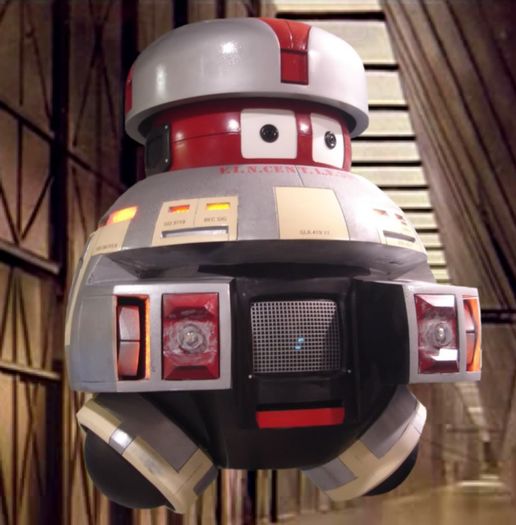
The ROV, VINCENT, is named after the robot in Disney’s The Black Hole. (Technically, VINCENT isn’t a character in the game, but anyway. That’s where I got the name from.)

Other influences

Some influences are a bit spoilery, so I will just list them here. You can read into them what you will.

  • Stark by Ben Elton
  • Europa Deep by Gary Gibson

Aurora Horizon design notes

You can see other parts of my design notes here:

Part 1 – Part 2 – Part 3 (this one) – Part 4 – Part 5

Monday, 31 March 2025

Aurora Horizon design notes #2: Contingencies

One of the things I’m thinking about for Aurora Horizon is having some characters with missing/faulty memories.

So part of the game would be about them recovering their memory – and coming to terms with things that aren’t as they originally thought they were.

The two main approaches that I can see are:

  • Putting the information in contingency envelopes (or GM handouts)
  • Providing all the information in advance and letting the player roleplay recovering memory.

Player preferences

I started a discussion on the ukfreeforms mailing list, and it became clear that some players prefer the surprise of in-game reveals, while others prefer to know everything in advance, as it allows them to think about how to play the character and integrate the information into their roleplay. 

So while some may enjoy the rollercoaster of unexpected twists, others prefer to know the key points ahead of time.

(And me? I don’t know – I’ve not done either. I suspect it depends on the game. I’ve written about it before, though.)

Should I ever create a second edition of Writing Freeform Larps, I will update the section on contingency envelopes to reflect this.

Contingencies

Contingency envelopes can be triggered by in-game events, by other players, or by time. (Or they may simply be handouts from the GM.)

Contingencies are a popular way of dealing with hidden information – I’ve used them.

For many players, opening a contingency is great – it’s like a small reward, and it’s exciting to find out what’s inside.

However, contingencies aren’t perfect:

  • Sometimes, the contingency is a disappointment and doesn’t contain anything new.
  • Reading lengthy information mid-game can be overwhelming for players with dyslexia or those for whom English is a second language.
  • Interrupting roleplay to read an envelope can disrupt the flow of the game.
  • Players might forget triggers and miss vital information. (I’ve certainly done this! Backup triggers may help here.)
  • If other characters reveal information before a player opens their envelope, it can be deflating.

Full disclosure

Providing all information upfront means putting all of the information in the character sheet in advance and explaining (through GM notes) how I imagine the character might be played.

This approach:

  • Allows players to plan their roleplay.
  • Enables players to foreshadow and create a richer character experience.
  • Reduces the burden on GMs.
  • Allows players to role-play their character’s surprise when appropriate.

However, not all players like this approach – especially those who enjoy being surprised by twists and turns.

I often use a full-disclosure approach for minor bits of information. So rather than use a contingency, I will often now write: “GM note: If you see item 25 (a painting), you recognise it as one that your grandfather painted and used to hang in your study. What is it doing here?”

I’ve yet to see a player abuse this, and it simplifies packing character envelopes.

Hybrid approaches

Of course, it is possible to combine both methods.

Players who like full disclosure can open their contingencies in advance. (The opposite isn’t quite so easy, of course.)

I may decide to have some parts of the game as full-disclosure but also have some contingencies for what I think are key secrets. (And if I really don’t want players to open them in advance, I could do them as GM handouts.)

Memory loss specifics

Amnesiac characters require a few special considerations.

  • Reveals should enhance a player’s experience, not detract from it. A contingency that completely changes a character’s nature should have some foreshadowing so it doesn’t feel too jarring.
  • It’s worth thinking about how the reveal is staged – giving it space and making it memorable. As a result, I am considering adding a psychologist/therapist character who can be the focus for recovering memories to give it a sense of importance.
  • Players should know that their character has lost their memory. Otherwise, they may assume that a lack of information indicates a badly written game. (We’ve all been there!)
  • Given the nature of memory loss, a single contingency could include too much information for a player to read and absorb while actively playing. So if possible, time “heavy” contingencies to suit any breaks.
  • Some players may not like receiving lots of new information during the game – something to consider as part of casting. 

Aurora Horizon

My plan is that Aurora Horizon is played over several scenes, and between the scenes, there will be time to open contingencies. So, as far as breaking the flow of the game and reading additional information, I’m less worried about that (but it’s still something to watch for).

I’ll probably end up with a mix of full disclosure (especially for low-impact stuff) with a few contingencies for the bigger secrets. 

Or I may bin this idea completely. We’ll see. I’m still writing.

Aurora Horizon design notes

You can see other parts of my design notes here:

Part 1 – Part 2 (this one) – Part 3 – Part 4 – Part 5

Monday, 24 March 2025

Aurora Horizon: design notes #1

Aurora Horizon is part six of my over-ambitious multi-part science-fiction first contact freeform larp. Previous episodes are: The Roswell Incident, All Flesh is Grass, Children of the Stars, Messages from Callisto, and The Stars our Destination.

This time, I decided to make some notes as I wrote the game. This is the first part.

The overall idea

In 2010, humanity sends a manned spacecraft (the titular Aurora Horizon) to investigate an alien spacecraft that has been parked on the surface of Callisto.

What do they find?

The problem

Writing Aurora Horizon as a ttrpg scenario would be easy. It’s a mysterious spacecraft with various things to discover. It would probably be a two- or three-session one-shot, I imagine.

But I’m writing it as a freeform larp for 13 players. 

And I must admit that I’ve been putting it off for a while, because it’s a bit tricky.

See, exploring a spacecraft (or a dungeon or a tomb or whatever) works fine as a ttrpg, but it’s not great for freeform larps.

Many years ago, I played in a 20-ish-player Lovecraft game, which included (among many other things) four of us exploring some catacombs below Arkham. While this was fine, it turned a larp into a ttrpg, which wasn’t really what I signed up for.  It also took one of the GMs out of the game, and I plan to run this on my own, so that’s not an option.

Whatever I do will need to be self-contained.

My plan

My plan is that the players will split into different groups at set times, when they go on EVA missions to explore Callisto or the alien ship.

They will choose an area to explore, and I will give them handouts explaining what they find. At the same time, there will be character-specific text.

My plan is to give them sufficient dilemmas to keep them occupied for 15-20 minutes before everyone reconvenes.

Inter-group communication

The game is set in 2010, and as a consequence, everyone can communicate with each other and see what’s going on via suit cameras.

My plan to deal with this is to let the players know that if they want to see what’s going on, they can.

They won’t be present, but they can respond, ask questions and offer advice. If they want to ask the captain something, they can.

(Although I’m not promising not to cut communications for dramatic effect.)

So that’s the plan so far.

Available to download

The first three episodes are available to download. Find them here:

The Roswell Incident (published by Freeform Games)

All Flesh is Grass (published by me on Itch)

Children of the Stars (also published by me on Itch)

(With the others to follow in due course...)

Aurora Horizon design notes

You can see other parts of my design notes here:

Part 1 (this one) – Part 2 – Part 3 – Part 4 – Part 5

Monday, 17 February 2025

Being responsible for UK Freeforms

I think I’m responsible for the name “UK freeforms”, because I set up a mailing list in the late 90s and that’s what I called it. But as to why I called it UK Freeforms, that’s a longer story.

My first freeform

I played my first freeform at Convulsion, in 1992. That was Home of the Bold, and it changed my life. Until then I’d been happily playing and running tabletop games (mostly Call of Cthulhu), but Home of the Bold changed everything for me, and I’ve been a fan of freeforms ever since.

I’d heard of freeforms before Home of the Bold, though. I can’t remember exactly where I heard them, but I’d read reviews of Morgana Cowling’s The Freeform Book (here's Amazon's entry) and I really, really wanted to try one out.

(It’s possible I heard about freeforms from Andrew Rilstone, who in the late 80s was hosting “fantasy parties” and talked about them in his fanzine, Aslan. Brian Williams also talks about the fantasy parties.)

The Freeform Book was published in 1989 and contains three complete freeforms for a dozen or so players, along with a fair amount of advice. Things have moved on since then, but it’s still a pretty good start. Cowling says that her first freeform was in 1985, so I was a relative latecomer to it.

Home of the Bold

Home of the Bold was written by Kevin Jacklin and David Hall. Kevin had been to the USA to play in Cafe Casablanca, a 60-player weekend-long freeform set in 1941 Casablanca. Inspired by that, he decided to bring that style of game to the UK, starting with Home of the Bold. As far as I can tell, the authors of Cafe Casablanca (which included Sandy Petersen, who, at Continuum told us stories of that and their follow-up The King’s Musketeers) never described it as a freeform - it was always a larp to them (I don’t know if they described it as “theatre-style larp” back then).

But Kevin and David advertised it as a freeform. I can think of two possible reasons.

First, in the early 90s, larp in the UK was very defined: fantasy, foam weapons, mandatory costuming, player-generated characters, very simulationist. I’ve tried larp once or twice, and it didn’t really agree with me - and if Home of the Bold had been advertised as a larp I may well not have turned up.

Second, the term freeform was already being bandied about - possibly as a result of The Freeform Book.

So Kevin and David advertised Home of the Bold as a freeform, and Continuum became known for a while as one of the best places to try out freeforms on the UK convention circuit. (And its successor, Continuum, still is – Home of the Bold was held again in 2024.)

Following Home of the Bold I started writing my own freeforms, both on my own and in collaboration with others. They were largely inspired by Home of the Bold and Cafe Casablanca, and although I called them freeforms (and continue to do so), I can trace a direct line back to theatre-style larps such as Cafe Casablanca.

A mailing list – and more

In 1997 or 1998, I started a mailing list for people who wanted to discuss writing, running and playing freeforms in the UK. So I called it “uk-freeforms”, and it stuck.

(Why didn’t I just set up a discussion forum? Well, in the mid-nineties, it was much easier to start a mailing list than figure out how to start a new forum on Usenet. And things like Facebook groups and Discord servers were years away.)

UK Freeforms, as an organisation, formed from enthusiastic members of the mailing list in the early 2000s and took over the running of the weekend-long freeforms, as well as organising Consequences (and part-sponsoring the Peaky writing weekends).

And I started Freeform Games in 2001 with Mo Holkar, bringing freeform-style murder mystery games to the general public.

The ukfreeforms mailing list continues to this day (although it’s moved to groups.io), there’s a very underused wiki, and I set up a UK Freeforms Facebook group. There’s also a Discord server. 

What is a freeform anyway?

Every couple of years ago, there’s a discussion on what exactly a “UK Freeform” is or whether “freeform” is a good name for them. There’s never consensus, which suits me just fine: I’ve always been reluctant to define it.

Note: This originally appeared on the UK Freeforms wiki here.

Update 2025

Mo posted this on Facebook, an extract from an Australian RPG convention booklet, which describes freeforms perfectly.

Monday, 16 December 2024

Children of the Stars

I’ve just put Children of the Stars on Itch.io.

Set in 1983, Children of the Stars is a science fiction first-contact freeform set in an alternate timeline where aliens are secretly on Earth. Decisions made during the game will affect future games – and maybe even the future of humanity itself!

Children of the Stars is the third in the series, following All Flesh is Grass (also on Itch) and The Roswell Incident (published through Freeform Games.

Writing history

I wrote Children of the Stars in 2022, and because I was preparing Writing Freeform Larps, I found it useful to work through the process again.

And I wrote about writing Children of the Stars here, on the blog, in four posts.

I have so far run it twice, once online and once at Consequences 2022. Assuming that I stick with my current plan, I expect I will next run it at Consequences 2026. (I want to run All Flesh is Grass in 2025.)

A long gap between publishing

There are many reasons for the long gap between finishing Children of the Stars and getting it ready for publication. These are some of them:

  • I’m easily distracted. I’m usually working on three or four projects at any one time. It would have come out quicker if I’d been focused only on Children of the Stars. But I like the variety.
  • Before I could publish Children of the Stars, I wanted to first publish the two games earlier in the series. The Roswell Incident was published in 2023, and All Flesh is Grass earlier this year, in 2024.

I also worked on the next episodes, Messages from Callisto (first run in 2023) and The Stars our Destination (first run in 2024).

But how to publish it?

It’s taken me a while to figure out how to publish Children of the Stars. As I’ve mentioned before, decisions made in earlier games affect what happens in later games. So, in All Flesh is Grass, the players can set up situations that affect later games. (Indeed, the decisions affect whether certain characters actually appear.) 

I’ve run Children of the Stars twice so far, and in both cases, a particular solution was chosen. So as part of getting it ready for publication, I’ve had to write additional material for those alternative timestreams. That’s been fun, but has meant that getting Children of the Stars ready for publication hasn’t been as simple as just top-and-tailing it.

My first idea was to create lots of alternative files for the alternate timelines – but that got confusing really quickly. So, instead, I’m using coloured text in MS Word files to denote different timestreams. The GM will then have to choose which of the coloured text suits their campaign so far.

Luckily, my friend James G ran All Flesh is Grass recently, and I’ve shared Children of the Stars with him. He gave me some good feedback and confirmed that the coloured text approach works well.

What’s next?

Now that Children of the Stars is done, I will start working on episode 6, which involves a mission to Callisto. It doesn’t have a title yet.

Once I’ve run that, I’ll get it ready for Consequences 2025. And then, I will start to work on getting episode 4 (Messages from Callisto) into a publishable stage.

So that should keep me out of mischief for a good while.

Friday, 29 November 2024

Consequences 2024

Last time, I was looking forward; now it’s time to look back. So how was Consequences 2024?

(And I should say that, strictly, this was “Quintessential Consequences,” but I prefer to remember them by the year, and as this is my blog, that’s what I’ll do.)

TL;DR: Consequences 2024 was awesome and I’m looking forward to next year. 

Logistics and accommodation

Consequences had a new venue for 2024, Lakeside Holiday Park near Chichester. It’s a five-hour drive from Yorkshire, so I set off early. (I’m not organised enough to take the train, and taking a car meant I could overpack.)

Our 6-berth static caravan. Not recommended for 6 adults.

The accommodation is either in a lodge or a static caravan. I shared a 6-berth static caravan with James, Kath and Matt. That was extremely cheap (it worked out at about £25 per room per night) but there were compromises – the bedrooms were tiny. I wasn’t sharing my twin room, and I wouldn’t have wanted to as the gap between the narrow beds was about six inches. Kath and Matt shared the double room but had no space for their luggage, which they left in the general social area. We did have two bathrooms, although one was so small if you’re any bigger than I am you would struggle.

The static caravans feel like they’re designed for a family (the twin rooms would be fine for kids).

The lodges, on the other hand, are much more luxurious and have much more space. However, there were only a limited number of them available, and we didn’t really need the extra space.

Consequences doesn’t provide meals, but the lodges/caravans have cooking facilities, and meals are available at the bar. I brought things for breakfast and lunch, and had bar meals in the evening.

For owls, not larks

It’s worth noting that Consequences caters more for the owls than it does for us larks. (And for Americans who haven’t adjusted their body clocks yet.) 

As an example, breakfast butties were only available from 9:30 – that’s practically mid-morning for me! And parties start late and carry on into the early hours.

That’s not a gripe, just an observation. If you are a lark, you just need to be wary of who you lodge with. And bring your own breakfast.

Spellbound

Written by Maria & Jeppe Bergmann Hamming and run by Mo Holkar, Mike Snowden and Quinn D.


Spellbound
was the game I was most concerned about before Consequences. It seemed to be the most Nordic of the larps, and that’s not something I’ve done before. I don’t really know how Nordic it was, but there were lots of workshops and the game was conducted silently while moving to music. (Eerie non-English folk/rock/indie music. No idea of the genre. Some vocals sounded like Bjork might have sung them, but I honestly don’t know. I didn’t recognise any of it – and it was suitably weird.)

As there were no words, the workshops covered (with varying degrees of success) how to move and how to interact. Broadly we were split into two camps – humans and the immortal undergrounders (in their glorious masks). The broad arc of the story was about how the undergrounders bound humans to their will, toyed with them, and then whether the humans returned to the human world or stayed.

And did I enjoy it? I think I did, eventually. I was way outside of my comfort zone to begin with, but after 20 minutes or so, I was getting the hang of it. It could have been 30 minutes shorter – we could have had fewer scenes, and each scene could easily have been at least one song shorter. 

Talking to one of the human players afterwards (I was an undergrounder), apparently, in one of the early breaks, they quickly agreed on a story and connection between themselves, which helped their game immensely. I might have enjoyed it more if the undergrounder also had more to them.

I’m glad I did it but I doubt I’d rush back to do a game like it again.

Incidentally, the original larp materials are here. And these are the Spotify playlists: Conflict, Party, Seduction, and Sentimental.

Friday

I had a terrible night’s sleep – which is usual for my first night at a games convention. At Consequences, this was compounded by the bitterly cold weather, and the caravan got very cold.

The Stars our Destination

This was my game, and the fifth in my series of first contact games. I don’t have much to say about it other than the players seemed to enjoy it. It went well from my perspective – I have a few tweaks to make here and there, but nothing major seemed to be broken.

Players conferring in groups: how a typical freeform looks

Next year I plan to bring episode 6. Assuming I can figure out how to make it work.

All You Need Is Love

Written and run by Laura Wood and Ruth Trenery-Leach.

2024 has been my hear of song/band larping (and it arguably started in 2023 with That Difficult Second Album at Peaky 2023). So there’s been West End Lullaby, Backstage Business, Success2Soon, All You Need Is Love, and (later on), Do You Hear The People Sing.

Anyway, in All you Need Is Love we were a newly-formed band that went through a defined arc that included singing Beatles songs to each other.

As the arcs were predefined, it felt more like theatrical improv rather than a “game”. So one scene included something like, “F is angry that their more experimental work is not being released by the band.” So we improvised and acted that out. So, on one hand, we weren’t given any agency in choosing the direction, but we did have agency in how we played that out.

Critically, though, this also avoided the dreaded freeform compromise. F argued that he only wanted one song on the next album, just one. And it would have been so easy to compromise and say yes, we’ll give you one song. But the directions didn’t let us do that, and so we couldn’t compromise – which was a very pleasant change.

Another oddity about the game was that we had 12 players, split into two groups of six. Each group had exactly the same instructions, with the same character packs, arcs and songs. But we fleshed out the details. It sounds like it shouldn’t work – but it did. There was no crossover between the groups, and while it’s tempting to suggest that might be something to try, I think it’s fine that there was no crossover.

As for me, I played “C”, who I named Charlie, who struggled with fame and unrequited love. I had a great time playing them with my fellow band members (played by Mo, Nickey, Karim, Dave and Ben).

And of course, it’s a lot of fun singing Beatles songs together.

The Koenig Dead

Written by Tony Mitton and run by Tony and AJ Smith.

I played Captain Alix Orban and wish I’d spent longer absorbing my 20-page character pack. As I mentioned last time, I found the character sheet a bit confusing, and during play, I struggled to look anything up in the heat of the moment. But unfortunately, I got distracted and didn’t do as much homework as maybe I should have.

Anyway, the game was fine. As the captain, I was always being called upon, but of course, I didn’t know that much – even if I’d memorised my character sheet, much of the detail was known by others. I had a lovely time interacting with my crew and Steve Bassett’s sinister Armari Thrace who gave me a hard time about the last time our character’s paths had crossed.

Other than the flow of the character sheet, my minor criticisms are:

  • The game space was slightly too small for our 14 players. That was a surprise as The Stars our Destination also had 14 players, but didn’t feel cramped in the same way. (Maybe the extra GM made all the difference.)
  • The game has content warnings, but there are a couple of occasions where even I thought, “ew” and wondered if they were necessary. (If the game were actually about those issues, then that would be different, but I didn’t expect it in a game based loosely on Firefly.)
  • For new players to the crew of the Kestrel, I think twenty minutes at the start of the game for the crew and passengers to get to know each other and understand what happened last episode would be time well spent. I’m sure the game is much smoother when those playing the continuing characters have played them previously.

Saturday

I had a slightly better night’s sleep (helped by the warmer weather), but it was still not brilliant, and I woke as usual at around 6 am.

Do You Hear The People Sing?

Written and run by Alex Helm, and subtitled “How the GM got their friends to perform Les Miserables for them”.

Photo by Tsijon

I played Franky Jackson who plays Thenardier (and a few other minor roles) in Les Mis. And it was a hoot. It was chaos, with singing and wild accusations, songs tanked, and I even brought the plate of sardines on stage for Master of the House. The actors playing Cosette and Eponine switched roles halfway through, but luckily the audience didn’t notice.

Definitely the highlight of Consequences for me. If you get the chance, play it.

I’d happily play it again, and I’m also hoping it creates a new genre of farce-musical crossovers that I can play. Mamma Mia, anyone?

Batukh Hungers!

Written and run by Alex Helm.

As I suspected before the game, Batukh Hungers! is a balloon debate: someone has to sacrifice themselves to the dark god, but nobody wants it to be them.

And to my surprise, it ended up being me!

I had a lovely game, particularly the angst and philosophical discussions on the nature of love with my wife (played by Elina), but it wasn’t until the last thirty minutes that I suddenly realised that I didn’t want my wife to be destroyed by the dark god. That led to a great finale – I could see other cult members persuading Elina to sacrifice herself, so I stepped forward and offered myself, and she tried to stop me. But failed.

A lovely ending to the game – nice and dramatic.

Sunday

I had a much better night’s sleep. I got back to the caravan at about 11:30 pm and had a decent wind down before going to bed. That seemed to work.

Hillfolk

On Sunday morning, I ran Hillfolk. I gave the players (JD, Martin, Clare, Heidi and Graham) a choice of the setting, and they chose Hazelwood Abbey (Downstairs) – which is the servants' playset I created for Hazelwood Abbey. This suited me as it’s the playset I hadn't run.

Nobody had played Hillfolk before, but they soon got the hang of it, and we had a dramatic story that featured a broken mirror and the blandest of bland pies. Nobody had chosen the butler or housekeeper roles, so I told everyone the old butler had left, but that the family were looking to replace him. I later told the housemaid that they would be happy to consider her for the position of housekeeper instead of a butler, creating a bit of competition.

We ended up with three procedural scenes – trying to fix a new mirror into the old frame (fail!), making a sauce (success!), and the housemaid and valet competing for the position of housekeeper or butler.

We talked about dramatic poles at the end, but everyone found the actual mechanic for determining who gets the bennies to be far too cumbersome. So we ignored that. I think in future, I will end by asking each player what we see their character doing in five years’ time. 

Interestingly, the more I run Hillfolk one-shots, the harder it is to imagine it as a longer-form game. Maybe that should be a goal for 2025.

The Roswell Incident

And finally, I ran The Roswell Incident. This is the first game in my multi-game first-contact series of freeforms, and the start of what I am calling Timeline 3. (The Stars our Destination was episode five of Timeline 2. Timeline 1 is online.)

For me, this was probably my least favourite game of Consequences. I made a couple of poor GM calls, and while I think most of the players had a good time, not all of them did. I’ve got a pile of notes to reflect on.

I think one of the problems is that I’ve published The Roswell Incident through Freeform Games, and more of the secrets come out during that (as it’s a one-shot) than is probably ideal for the start of a series of games. But maybe that doesn’t matter – I guess I find out next year when I run part 2, All Flesh is Grass.

Getting back

I think I may have figured out my problem with sleep.

At gaming cons, I think I get over-stimulated with the games and people and conversations and ideas, and I need peace and quiet before I try and sleep. I probably need more than I think – so maybe at least 30 minutes on my own. And I think I need to read a book, something unrelated to the event; reading calms my mind and tells my brain that it’s time to go to sleep. Which is what I did on Sunday night, by making sure I was back in the caravan shortly after 10 pm and having time to wind down. I will try and remember this for Shogun in 2025.

And so on Monday, after the best night’s sleep so far, I drove back, listening to the splendid Aldritch Kemp and the Rose of Pamir on BBC Sounds.