Tuesday, 29 April 2025

Far Horizon: an after-action review

Far Horizon is a near-future hard-SF scenario for Cepheus published by Zozer and written by Paul Elliot. It is set in Zozer’s Orbital 2100 universe, although it’s fully self-contained and you don’t need that book to run Far Horizon.

I recently played the scenario online over two sessions. I bought the scenario between sessions, and now that we have completed the adventure, I have read it.

(I’m unfamiliar with Cepheus, but I do know Traveller, which I gather it’s based on. So if my comments on the mechanics are slightly off, that may be why.)

I’ve tried to keep this review spoiler-free, but I expect a few minor spoilers have crept in. (Think of them as teasers!)

The scenario

Far Horizon concerns a deep space mission to the Kuiper Belt. The crew have surveyed Pluto (their planned mission) when mission control tells them that a rogue xenoplanet (given the name Tartarus) will pass through the Kuiper Belt, giving them a 96-hour window to explore it. So six months later, our heroes emerge from cryosleep with the ship in orbit around Tartarus and 96 hours to complete their mission.

The conflicts in the mission are primarily environmental – the PCs will be battling time pressures (balancing the mission with their need to take breaks) and the sheer peril of exploring an exoplanet at -180C.

Far Horizon shares many similarities with the Aurora Horizon freeform larp that I’ve been writing since January. They both involve sending a manned mission into the icy depths of space, with crewmembers coming out of cryosleep and the opportunity to explore a cold icy world. So I was keen to both complete the adventure and buy the book. (I wonder if Far Horizon influenced my ship title? It’s possible.)

The DRV Far Horizon

The first part of the book concerns the DRV Far Horizon itself. The ship is a TL9 1000 dton deep space exploration vehicle. Although the book has Traveller/Cepheus stats for the ship, it really feels like a genuine Earth ship. I could imagine it popping up in a future series of For All Mankind or Allen Steele’s Near Space series. (Or in an ALIEN scenario, come to think of it.)

13 pages are dedicated to the DRV Far Horizon, including ship stats, a tour by one of the engineers, four pages of deck plans and the two auxiliary craft. These details are worth the price of admission, even before you include the adventure.

The only downside to all this material is that we didn’t actually use much of it during the game. (At least as players, maybe the GM was referring to them more.) I don’t think I ever looked at the deck plans.

The crew

The DRV Far Horizon has a crew of 12, and stats for each are provided, making it easy to run as a one-shot with each player controlling two or three characters.

When I played, we were originally going to have six players, each controlling two PCs. When it came to the second session, only three players could make it, so while we controlled our two original PCs, we controlled the others as and when we needed to. (It might have been smarter to have divided them all up between us at the start of the second session, but we didn’t do that.)

As is usual in Traveller games, the characters are just stats. There’s nothing to help a player bring the character to life. If I were to run Far Horizon, I’d ask open questions to create bonds and backstory between the characters: Who do you admire? Who irritates you, and why? Who is your closest friend? What happened on Pluto? That sort of thing. (And had I published Far Horizon, I would have included that in the adventure material.)

The characters are a bit odd, though. Given that these are specialists who have trained for years for this mission and are presumably the cream of the crop, there are a few peculiarities.

For example, one of my characters was Mission Specialist Shireen Langstrom: 648AB8 Age 38 Terms 5 Survival 1, Geomorphology 1, Mechanics 2, Engineering 1, Vacc Suit 0, Comms 0 

Shireen has a dexterity of 4. That gives her -1 on Dex rolls. And if she’s in a vacc suit, that’s another -1 (because in this world, vacc suits are cumbersome). I don’t see how Shireen passed the medical! (And Shireen isn’t the only one with a low physical stat.)

I brought this up during play (when I needed to make a Dex roll and discovered my penalty to roll), and one of the other players suggested that maybe it was a glitch from the cryofreezers. Maybe Shireen had the shakes or nerve damage from spending so long in the state-of-the-art-but-ever-so-slightly-experimental cryofreezers. That would have been a great part of the scenario – starting the game with the post-cryosleep medical and discovering that some characters have suffered some sort of damage. (I have used this idea in my Aurora Horizon freeform larp, although with memories rather than physical characteristics, as discussed here.)

Skill redundancies

Another slight oddity is that some skills are in short supply. Notably, there is only one medic. I am pretty sure that flight training would have covered all sorts of skills that the team might conceivably need, and I would expect several people to have Medic-1 or Medic-0.

Similarly, there are only three characters with pilot skill. The scenario talks about the lander needing a pilot and a co-pilot, so three characters with the pilot skill aren’t enough. One lander catastrophe and you’re down to only one pilot!

So I would rebalance the skills a little.

Vacc Suits

Far Horizon goes into some detail on vacc suits, and customising your suit is part of character creation.

Fundamentally, wearing a vacc suit makes doing almost anything harder. They’re cumbersome and awkward, and wearing one means you get a penalty for many rolls.

There are also general rules for working in a vacuum suit, along with rules for donning and doffing a suit in a hurry, and rules for carrying out hard work in a suit. Failure isn’t necessarily fatal – Far Horizon includes a table of suit malfunctions that range from inconsequential (erratic suit instruments) to irritating (visor keeps fogging up) to more consequential (suit puncture).

I liked the way the vacc suit rules add to the hard-sf atmosphere of working in an unforgiving environment.

Tartarus and the mission

The xenoplanet, Tartarus, is then detailed. This comes with a minigame involving how much the players can get done in their 96 hours, with criteria for success.

Early scans result in areas of the surface being highlighted for further analysis and exploration. The crew won’t have time to visit them all, however, so they must pick and choose. And as they do so, Tartarus will slowly reveal its secrets.

Far Horizon is very much a resource management game. As well as fatigue, players must balance the skills of the away team, the lander’s fuel reserves, oxygen supplies and more.

Exploring Tartarus is hazardous, and rolls are needed during descent and for landing (and for taking off, once the players are finished with an area). And more hazards await on the surface: Tartarus does not give up its secrets easily.

Failing a roll doesn’t necessarily result in disaster – many complications may result in the away team needing to cut short their mission, or becoming stranded.

Finally, there’s another problem that those left behind aboard the DRV Far Horizon must deal with. I’m not going to talk about it because I don’t want to reveal too much.

Getting home

Far Horizon wraps up with an explanation of what’s really going on and rules for getting home, which get harder the longer the crew overstay their 96-hour deadline.

Playing Far Horizon

I played Far Horizon over two online sessions, taking about eight hours in total using Roll20. We had five players and the GM in the first session, and three plus the GM in the second. I much preferred the second session, but I found Roll20 was struggling with six of us. (I prefer smaller groups.)

So during the first session, we conducted the initial surveys and landed on Tartarus. Our commander put himself in charge of managing time and resources – I was struggling with dropping out, so it was good that he could do that. We visited two sites on Tartarus and had to deal with the lander icing up.

In our second session, Roll20 worked better for me, and I helped with the planning. I don’t normally enjoy tracking things like encumbrance, but doing it as a team was fun.

I had decided that one of my characters wanted to make a mark, so while on the ground, I was winched into an ice canyon in search of strangely-coloured ice and explored a strange cave. I paid for my troubles – I twisted my knee getting out of the canyon, but the doc put me on painkillers so I could carry on.

Our game finished with our pilots making tricky piloting rolls to deal with an unexpected situation, and we left Tartarus for Earth in good time to get home.

One thing I really liked was Traveller’s skill chains. One of the players suggested we use them for several of the tasks, and the GM readily agreed. So we used them a fair bit, whenever we were working as a team. (I’m surprised that sort of approach doesn’t appear in more games – I will certainly use it more in future.)

Anyway, I had a good time. There was perhaps a little less inter-character banter than I prefer, but Far Horizon really did feel like a hard-science SF game, and I’ve not played one of those in a long time.

Pedant’s corner

And because I’m me, I can’t help but be a little pedantic. Now that I’ve read the book, I spotted a few typos and other glitches, such as unfinished quotation marks and inconsistent paragraph breaks.

On page 37, Tartarus spends “millions of years of interstellar wandering”, but on page 56, it’s calculated that it’s been travelling for less than a million.

I found the layout slightly unpleasant to read. Text is formatted into a single justified column about 90 characters long, which is longer than typographers advise (this Wikipedia page suggests 66 as an ideal length). And being justified (and some of them are many lines long), I sometimes found it easy to lose my place.

The crew sheets starting on page 24 don’t include the characters’ zero-rated skills.

So it could do with another proofread – and ideally reformatting the pages to be easier to read.

Overall

Overall, I’m really pleased with Far Horizon. A great ship and an intriguing hard-SF adventure.

Am I going to run it? Probably not, but I’m pleased I bought it. I expect I’ll use the Far Horizon deck plans and stats at some point in the future.

Get Far Horizon here.

Monday, 21 April 2025

FTL in the Harvesters universe

In science fiction, each “universe” has its own FTL travel.

Star Trek has warp.

Star Wars and Larry Niven’s Known Space have hyperdrives.

Babylon 5 has hyperspace.

Alan Dean Foster’s Commonwealth books have the KK Drive.

Cover to Orphan Star featuring Tim White's KK-drive starship
Tim White's KK-Drive starship

Dune has space folding. 

Allen Steele’s Coyote series has star bridges.

The Mote in God’s Eye (Larry Niven and Jerry Pournelle) has the Alderson Drive.

Traveller has jump drive.

John Scalzi’s Interdependency Series has the Flow. (And here’s a short story about its origin.)

The Expanse has the ring gate and its slow zone.

So each universe has its own way of breaking the rules of physics and travelling faster than light.

And many of them are the same kind of thing, just relabelled.

The Uplift Saga

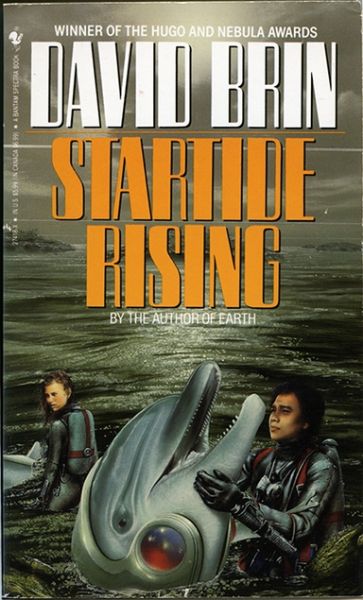
Then there’s David Brin’s Uplift Saga. While the first book doesn’t really mention FTL travel, when it came to the second, Startide Rising, I was amazed to discover that the various alien races (and there is a multitude of them) use a wide range of FTL drives to suit their temperaments.

Cover to David Brin's Startide Rising

I can’t remember the different types of FTL drive (Startide Rising is on my to-reread list), and I can’t remember if I still have GURPS Uplift, or where it is if I do still have it.

So I did the same with my series of first contact freeform larps. Here’s the current list:

  • Hyperdrives, which use hyperspace as a shortcut. Hyperdrives may still take many months to travel between stars, however.
  • L-points are nexus points between stars. Travel is instantaneous, but the points are often close to (or sometimes within) stellar masses.
  • Wormhole drives create wormholes between different parts of spacetime. Travel through the wormholes is instantaneous, but time is taken getting to and from where the wormholes can be created (deep space).
  • Star bridges are stable wormholes constructed between two locations. Travel across the star bridge is instantaneous.
  • The flow is an n-dimensional current that flow drives access. Travel using the flow is in one direction only.
  • Teleporters convert a ship and its contents into information sent through spacetime (at the speed of light) or a wormhole.
  • And some races even use slower-than-light travel.

Travel through conventional space is only possible at speeds below the speed of light. As a result, species that use STL often put their crews into cryosleep.

And we have a date for Aurora Horizon’s premiere

And we now have a date. After a bit of too-ing and fro-ing, I’m running it at the end of May.

The game files are mostly prepared, so between now and then I’m casting, sending out characters, redecorating the game space (a Discord server) and preparing the game instructions for when I run it again.

So I’ll have to think about something else to write about until then.

And after that: Consequences 2025

I’ve also submitted Aurora Horizon for Consequences 2025. That will be face-to-face in November, which means changing the format of handouts and contingencies, so I will do that over the next couple of weeks.

Aurora Horizon design notes

You can see other parts of my design notes here:

Part 1 – Part 2 – Part 3 – Part 4 – Part 5 (this one)

Sunday, 13 April 2025

Aurora Horizon design notes #4: The magic and the dip

I’m at that point in writing Aurora Horizon where I’ve written all the plots (in their own separate Word documents) and I’m now copying the text into the blank character template.

And it’s magical.

The process

Here’s what I do:

  1. Make a copy of my blank character sheet template. (Or, just as likely, take the last character I did and just delete all the old stuff.)
  2. Change the filename, title and footers to the new character.
  3. Copy the opening paragraphs that introduce the character and set the scene for everything that follows. (Although I deviated from this point, as noted below.)
  4. Go into each plot document and copy the relevant text (in this case, plot background, other people information and/or goals). As I do this, I colour the original text in the plot document purple, so I know I’ve copied it.
  5. Rearrange the text so it’s in an order that makes sense to the character. So the “important” background is covered first, with incidental bits coming later. I put the list of other characters (Other People) in cast list order. Goals are ordered roughly in line with the background, so the goals that I think are most important to the character are first.
  6. Read through the whole character and make sure it flows properly, editing and correcting as I do.

It’s amazing; each character is finished as soon as you’re done (and it only takes 15-20 minutes or so).

And because the work of writing the plots was done sometime in the past, it feels like the characters are popping out, fully formed, with barely any effort.

And suddenly, before you know it, you have a freeform larp virtually ready to run.

The dip

I haven’t found Aurora Horizon an easy freeform to write.

Many projects go through a challenging phase, a dip. Writing a freeform larp can be no different.

And I hit a dip with writing Aurora Horizon, which is probably the biggest dip I’ve had when writing any of these larps.

I think that maybe because Aurora Horizon has been a difficult freeform for me to write. I’ve not written an exploratory game before, so much of this is new to me. There are things I have ideas for, and some that I can’t figure out how to do. 

(As an example, I wanted to have some kind of memory overlay plot going on, but I couldn’t figure out how to do it justice. So I’ve canned it, which is a bit of a shame. And at one point I had a dead co-pilot, but I dropped that sub-plot as well.)

And there will be exposition dumps that I can’t see a way of avoiding.

Pushing through the dip

What I do know is that my process for writing freeforms works.

I knew I needed to “simply” push through the dip. Keep following the process. Write a plot. Then another one. Then another one.

But perhaps I shouldn’t have deviated from the process as much as I did. Before I start writing plots, I usually write the opening paragraph for each character so that I know something about them and how they fit into the game.

But I didn’t do that, mainly because I was struggling to figure out how to make the memory-loss-overlay plot work. So instead, to give me a boost, I wrote an easy plot first (stuff about exploring Callisto). And once I did that, things started to flow. And once things started flowing, I didn’t want to go back.

But as a result, I juggled character stuff with mission stuff, and invented the mechanics for exploring the alien ship as I went along. And I didn’t write those character introductions until after all the plots had been done, which wasn’t ideal.

Do the easy stuff first

Which brings me to a useful tip that helps me get through dips: do the easy stuff first. 

Doing the easy stuff first means I get in some early wins and start seeing progress. And with a little momentum, the trickier stuff won’t seem so daunting.

So I put the memory stuff on the back burner, and returned to it at the end. (It wasn’t quite what I was hoping for, but I’ll save that idea for another time.)

Online contingencies

I do have an idea for online contingencies, though.

I’ve struggled with online contingency envelopes because I haven’t worked out how to do them so players don’t read them before the game. 

But I’ve realised that I can give them a Word document with the text covered by black highlight, so it looks like it’s been censored. That way, they can only read it if they remove the black highlight, which they would have to do deliberately. 

And for those players who like to open their contingency envelopes before the game, it doesn’t stop them from reading them in advance.

It seems like such a simple solution that I can’t believe it’s taken me this long to think of it.

(The one catch is if a player doesn’t have MS Word, but I can do the same with a Google Doc if necessary.)

The light at the end of the tunnel

At this point, I can also sense that the game is almost finished. After the characters, I have a few handouts to compile and a timetable to flesh out – but that’s about it.

Then I will need to think about arranging its first run…

Aurora Horizon design notes

You can see other parts of my design notes here:

Part 1 – Part 2 – Part 3 – Part 4 (this one) – Part 5

Monday, 7 April 2025

Aurora Horizon design notes #3: Inspiration

I wish I could remember where all the inspiration had come from for some of the other games in the series. So for Aurora Horizon, I’m writing it down.

The Aurora Horizon

The overall design of the Aurora Horizon (as in the overall ball-on-a-stick look) is taken from the Discovery in 2001: A Space Odyssey (Arthur C Clarke and Stanley Kubrick). 

(In researching this, I thought I read somewhere that Discovery used a nuclear pebble-bed reactor, but I can’t find the source now.)

CORA 9000

CORA 9000 is the name of the Aurora Horizon’s computer system (a player in the game). The name is inspired by HAL 9000 (2001: A Space Odyssey, again) with a hint of Blake 7’s Orac.

Does CORA 9000 have an agenda of its own? I couldn’t possibly comment.

Aerobraking

The aerobraking manoeuvre in Jupiter’s upper atmosphere was inspired by Leonov doing the same in 2010: The Year We Make Contact.

It’s only in the background (although it causes serious damage to the Aurora Horizon), but still. That’s where the idea came from.

Cryosleep

Cryosleep has been a feature of SF ever since I started reading it (probably most influentially, ALIEN).  2010 also has cryosleep, and if I remember the book (2010: Odyssey 2) correctly, actually reversed the ageing process for the characters, which I liked.

The idea that cryosleep might cause harm was taken from The Legacy of Heorot by Larry Niven, Jerry Pournelle, and Steven Barnes. (Plus, of course, Traveller has its often-lethal low berths, which I’ve discussed before.)

Names of characters

The names of the human characters are either inspired by characters or their actors in 2001: A Space Odyssey and 2010: The Year We Make Contact or are taken directly from them.

For example, Commander Archer was inspired by Bowman.

The three Tau characters (Huey, Louie and Dewey) are named after the robots in Silent Running.

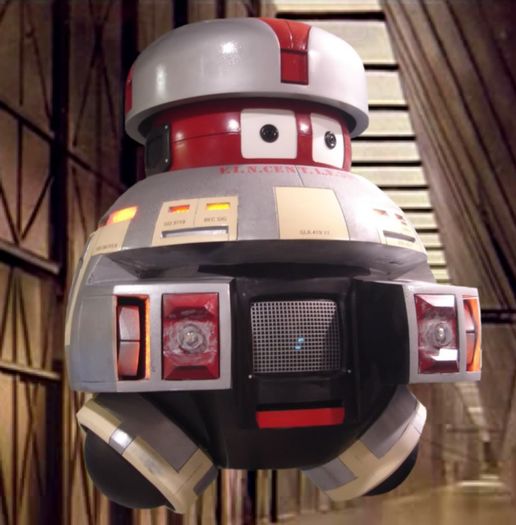
The ROV, VINCENT, is named after the robot in Disney’s The Black Hole. (Technically, VINCENT isn’t a character in the game, but anyway. That’s where I got the name from.)

Other influences

Some influences are a bit spoilery, so I will just list them here. You can read into them what you will.

  • Stark by Ben Elton
  • Europa Deep by Gary Gibson

Aurora Horizon design notes

You can see other parts of my design notes here:

Part 1 – Part 2 – Part 3 (this one) – Part 4 – Part 5

Monday, 31 March 2025

Aurora Horizon design notes #2: Contingencies

One of the things I’m thinking about for Aurora Horizon is having some characters with missing/faulty memories.

So part of the game would be about them recovering their memory – and coming to terms with things that aren’t as they originally thought they were.

The two main approaches that I can see are:

  • Putting the information in contingency envelopes (or GM handouts)
  • Providing all the information in advance and letting the player roleplay recovering memory.

Player preferences

I started a discussion on the ukfreeforms mailing list, and it became clear that some players prefer the surprise of in-game reveals, while others prefer to know everything in advance, as it allows them to think about how to play the character and integrate the information into their roleplay. 

So while some may enjoy the rollercoaster of unexpected twists, others prefer to know the key points ahead of time.

(And me? I don’t know – I’ve not done either. I suspect it depends on the game. I’ve written about it before, though.)

Should I ever create a second edition of Writing Freeform Larps, I will update the section on contingency envelopes to reflect this.

Contingencies

Contingency envelopes can be triggered by in-game events, by other players, or by time. (Or they may simply be handouts from the GM.)

Contingencies are a popular way of dealing with hidden information – I’ve used them.

For many players, opening a contingency is great – it’s like a small reward, and it’s exciting to find out what’s inside.

However, contingencies aren’t perfect:

  • Sometimes, the contingency is a disappointment and doesn’t contain anything new.
  • Reading lengthy information mid-game can be overwhelming for players with dyslexia or those for whom English is a second language.
  • Interrupting roleplay to read an envelope can disrupt the flow of the game.
  • Players might forget triggers and miss vital information. (I’ve certainly done this! Backup triggers may help here.)
  • If other characters reveal information before a player opens their envelope, it can be deflating.

Full disclosure

Providing all information upfront means putting all of the information in the character sheet in advance and explaining (through GM notes) how I imagine the character might be played.

This approach:

  • Allows players to plan their roleplay.
  • Enables players to foreshadow and create a richer character experience.
  • Reduces the burden on GMs.
  • Allows players to role-play their character’s surprise when appropriate.

However, not all players like this approach – especially those who enjoy being surprised by twists and turns.

I often use a full-disclosure approach for minor bits of information. So rather than use a contingency, I will often now write: “GM note: If you see item 25 (a painting), you recognise it as one that your grandfather painted and used to hang in your study. What is it doing here?”

I’ve yet to see a player abuse this, and it simplifies packing character envelopes.

Hybrid approaches

Of course, it is possible to combine both methods.

Players who like full disclosure can open their contingencies in advance. (The opposite isn’t quite so easy, of course.)

I may decide to have some parts of the game as full-disclosure but also have some contingencies for what I think are key secrets. (And if I really don’t want players to open them in advance, I could do them as GM handouts.)

Memory loss specifics

Amnesiac characters require a few special considerations.

  • Reveals should enhance a player’s experience, not detract from it. A contingency that completely changes a character’s nature should have some foreshadowing so it doesn’t feel too jarring.
  • It’s worth thinking about how the reveal is staged – giving it space and making it memorable. As a result, I am considering adding a psychologist/therapist character who can be the focus for recovering memories to give it a sense of importance.
  • Players should know that their character has lost their memory. Otherwise, they may assume that a lack of information indicates a badly written game. (We’ve all been there!)
  • Given the nature of memory loss, a single contingency could include too much information for a player to read and absorb while actively playing. So if possible, time “heavy” contingencies to suit any breaks.
  • Some players may not like receiving lots of new information during the game – something to consider as part of casting. 

Aurora Horizon

My plan is that Aurora Horizon is played over several scenes, and between the scenes, there will be time to open contingencies. So, as far as breaking the flow of the game and reading additional information, I’m less worried about that (but it’s still something to watch for).

I’ll probably end up with a mix of full disclosure (especially for low-impact stuff) with a few contingencies for the bigger secrets. 

Or I may bin this idea completely. We’ll see. I’m still writing.

Aurora Horizon design notes

You can see other parts of my design notes here:

Part 1 – Part 2 (this one) – Part 3 – Part 4 – Part 5

Monday, 24 March 2025

Aurora Horizon: design notes #1

Aurora Horizon is part six of my over-ambitious multi-part science-fiction first contact freeform larp. Previous episodes are: The Roswell Incident, All Flesh is Grass, Children of the Stars, Messages from Callisto, and The Stars our Destination.

This time, I decided to make some notes as I wrote the game. This is the first part.

The overall idea

In 2010, humanity sends a manned spacecraft (the titular Aurora Horizon) to investigate an alien spacecraft that has been parked on the surface of Callisto.

What do they find?

The problem

Writing Aurora Horizon as a ttrpg scenario would be easy. It’s a mysterious spacecraft with various things to discover. It would probably be a two- or three-session one-shot, I imagine.

But I’m writing it as a freeform larp for 13 players. 

And I must admit that I’ve been putting it off for a while, because it’s a bit tricky.

See, exploring a spacecraft (or a dungeon or a tomb or whatever) works fine as a ttrpg, but it’s not great for freeform larps.

Many years ago, I played in a 20-ish-player Lovecraft game, which included (among many other things) four of us exploring some catacombs below Arkham. While this was fine, it turned a larp into a ttrpg, which wasn’t really what I signed up for.  It also took one of the GMs out of the game, and I plan to run this on my own, so that’s not an option.

Whatever I do will need to be self-contained.

My plan

My plan is that the players will split into different groups at set times, when they go on EVA missions to explore Callisto or the alien ship.

They will choose an area to explore, and I will give them handouts explaining what they find. At the same time, there will be character-specific text.

My plan is to give them sufficient dilemmas to keep them occupied for 15-20 minutes before everyone reconvenes.

Inter-group communication

The game is set in 2010, and as a consequence, everyone can communicate with each other and see what’s going on via suit cameras.

My plan to deal with this is to let the players know that if they want to see what’s going on, they can.

They won’t be present, but they can respond, ask questions and offer advice. If they want to ask the captain something, they can.

(Although I’m not promising not to cut communications for dramatic effect.)

So that’s the plan so far.

Available to download

The first three episodes are available to download. Find them here:

The Roswell Incident (published by Freeform Games)

All Flesh is Grass (published by me on Itch)

Children of the Stars (also published by me on Itch)

(With the others to follow in due course...)

Aurora Horizon design notes

You can see other parts of my design notes here:

Part 1 (this one) – Part 2 – Part 3 – Part 4 – Part 5

Tuesday, 18 March 2025

Airecon 2025

Ow. Ow. Ow ow ow.

So let’s get the bad out of the way first. Two days before Airecon 2025, I put my back out. Ouch! And to nobody’s surprise, spending three days at Airecon didn’t do it any favours. (I’m resting it now…)

But despite that, I had a great time. This is what I did.

Friday

Friday was my day for running tabletop roleplaying games.

Last year I left it a bit late and arrived at my table only a few minutes before we were due to start playing. I don’t like running late, so this year I set off from home in plenty of time (and this time remembering that driving into Harrogate during rush hour can be grim).

Anyway, I arrived at the convention centre at about 9:15 am. There was (unsurprisingly) a queue to get in, but that was okay. The doors opened at 9:30, and as most people ahead of me in the queue had checked in last night, it was only a couple of minutes before I was picking up my tickets and heading into the first of several cavernous halls.

I had plenty of time, so I got myself settled in and found the food hall, where I got a cup of tea.

10:15 to 13:15 The Aurors (Fate Accelerated)

At about 10:15, my players turned up, and we started playing The Aurors, my Wizarding World-themed Fate Accelerated investigation. (You can download it here for free.)

The players threw me an interesting curveball – during the minimal character generation, one of my Aurors developed a backstory involving Lidl and dark wizards. At our first location (the lovely town of Warkworth in Northumberland), he spent a fate token to add a story detail – Warkworth now has a Lidl in its centre. And so the players decided to check it out.

While one created a firework-based distraction in the front of the shop, the others went in around the back. So I mentally threw away the prepared start of the adventure and moved the first location to the Lidl storeroom, which the PCs investigated (while fire out front rapidly caught hold, drawing the fire brigade).

Anyway, the rest of the adventure played out (more-or-less) as expected, and our heroes defeated the villain.

I had a good time running The Aurors. The players were engaged and seemed to enjoy themselves. I don’t think any had played Fate before, but they certainly got into the swing of it.

I kept the pace up, as at only three hours, the first RPG session at Airecon is the shortest. Something to be aware of when deciding which game to run.

Lunchbreak

One thing to note if you’re running (and I guess playing) all day is that you only have a 45-minute break between session 1 and session 2. Given the food queues at previous Airecons, that might have been a problem, but luckily, it was fine this year.

Anyway, in my 45 minutes, I dropped some games into the bring-and-buy (which was extremely easy – it’s a very easy system to use – and by leaving it this late, I didn’t have to queue), and then picked up some sandwiches, which I ate back at the table.

14:00 to 18:00 Hillfolk

My second game was Hillfolk, and sadly, only two people had signed up. I really need at least three for Hillfolk (ideally four or five), so one of the other GMs (whose game wasn’t running) joined my table.

We had the Chief, the Curate, and the Captain, and this time, the game went in a very different direction. The tribe quickly became very weak (a raid on a neighbouring tribe went badly) and ended up merging with one of their rivals.

With only three PCs, I ended up running several NPCs. My favourite was Delight, the chief’s ex-girlfriend who deliberately undermined him whenever she was in a scene.

Two of my players had never played Hillfolk before – but the third had played in my game last year and come back for more!

Tea

We finished slightly early (which was always likely to happen with only three players), and so I had a leisurely hour for tea (a nice steak and ale pie with mushy peas) and chatted with old friends.

(And new friends. Someone smiled at me when I was walking gingerly through the halls, and although I smiled back, but didn’t recognise them. Our paths crossed again shortly after and they explained that they enjoyed my Cthulhu Dark adventure last year.)

19:00 to 23:00 Perfect Organism (ALIEN)

My final game was Perfect Organism, my ALIEN cinematic one-shot set a few months after Aliens and concerning the USCMC’s investigation into the loss of the Sulaco. (Download it here for free.)  

This went brilliantly. I created the characters to be deliberately antagonistic towards each other (lots of conflicting agendas), and for the first 45 minutes or so,, I did almost nothing but watch them roleplay. The players really leaned into their characters and it quickly got very intense. At one point I asked if everyone was okay, but they said they knew each other and were having a great time (but appreciated my concern for their wellbeing).

As ever with an ALIEN game, there were character deaths. We ended up with two dead and the other two in cryosleep tubes on LV-426 with no obvious means of rescue…

And with that over, I packed up and drove home.

Saturday

After a not-great night (bad back), this time I took the bus to Harrogate, getting there at about 9:45. I went straight up to the RPG area where I had signed up for a game of Slugblaster.

Slugblaster

I’ve reviewed Slugblaster before but this would be my first chance to see it in action. I signed up when Guy noted over on the Gaming Tavern forum that he was running Slugblaster at Airecon…

Unfortunately, Guy wasn’t well, and the session would have been cancelled – except the Airecon gods smiled on us. As luck would have it, we had a replacement GM, Iain, who not only knew Slugblaster but also had a one-shot session with him and wasn’t doing anything else at that moment. (As it turns out, Iain runs a game very much like Guy does.)

I took The Heart playbook. My character was Solstice, and I rode a Hardlight BMX (whatever that is).

One of the things I really like about Slugblaster is the character beats – mini dramatic arcs. Iain had already started a couple of beats on each pregen, and on mine, the Heart Arc had started: Solstice had started a relationship (with a girl I named Luna) with a member of another gang.

Iain structured the game so that we started play at the the end of a run, then we got to play some downtime, then we played through a full run, and finished with a bit of downtime.

It was all great, and I worked through two more beats in the Heart arc – the rest of the gang learned about my feelings for Luna, and it almost tore us apart.

It was brilliant, and now I want to play Slugblaster even more… (At the very least, I need to re-read the rules!)

Saturday afternoon

I chatted with Dom over lunch (I think we should start some face-to-face gaming in Wetherby), and then parted – him to run his game and me to socialise.

I bumped into Paul of Cthulhu (who runs the Yog-Sothoth.com Cthulhu website), who I haven’t seen in years. He runs a podcast and took the opportunity to interview me about the origins of Tales of Terror, the little ideas booklet I produced in 1990. I have no idea if it was any good or not or if it will actually appear. (And as I was unprepared, I forgot to mention my co-editor, Garrie Hall, who was so influential. Oops.)

I also took my proceeds from the Bring & Buy – through some aggressive pricing, I had sold all of my games.

I had arranged to meet another friend, Philippa, but she was playing Blood on the Clocktower, so I enjoyed a quiet beer while I waited. When I caught up with Philippa, she needed something to eat, and after that, we tried a demo of Rallyman GT (which was fine but not special).

Phillippa had a game of Root booked at 6 pm, and my back was giving me gyp, so I headed home.

Sunday

If I hadn’t promised to take my daughter to Airecon, I probably would have stayed at home and looked after my back. As it was, I came into Harrogate for my third painful day.

Sunday was a day of board games and demos. We played several: Finspan, Spokes, Word Colony, Living Forest Duel, Flow, Wizards Cup, and War of the Worlds: One More Day.

My favourite was probably Finspan or Living Forest Duel. Megan liked Spokes (and really didn’t like Word Colony, as trivia isn’t her strong point).

It was a nice break from revising for A-Levels, and we headed home shortly after 3 pm.

Airecon mementos

Next year

So what about next year?

As usual, I will aim to run three TTRPG sessions. It’s much too early to decide which games, but I like running Hillfolk, but it struggles to attract players. I wonder if I should create a more geek-friendly playset – maybe something set in the ALIEN universe. (I dunno, the leaders of the colony on LV426? That might be fun. I’ll have a think.)

And this year, Airecon had a couple of rooms set aside for “social games” – things like Werewolf and Blood on the Clock Tower. They’d be ideal for a small freeform larp, so I may investigate that. (I will try and persuade Graham to find out more – I’m happy to be involved!)

This year, I also learned how the game finder worked (thanks, Philippa!) – if you want to run a game of something, you can add it to the system and say when and where you’ll be. And then people can sign up. (Or you can just trust the lightsabres – which indicate a game looking for players.) As I so rarely play Cosmic Encounter these days (it’s best with 4-5 and doesn’t appeal to Mrs H, so it rarely sees the light of day), next year’s Airecon may be an opportunity.

But that suggests I’m going to be extremely busy…

And hopefully, my back will behave itself!